
5 AI Use Cases That Can Save You Time at Work (2026) — Use Today
Author: Python Technologies Date: 07/20/2026
The average employee spends more than two hours a day on tasks that do not require human judgment. Answering the same questions. Filing the same documents. Qualifying the same types of leads. Writing the same kinds of product copy.
That time adds up fast. Across a team of ten people, two hours each is twenty hours a week lost to work that AI can handle right now.
This guide covers five AI use cases that Canadian businesses are using today to get that time back. Not theoretical future applications. Tools and systems that are live, tested, and saving real teams real hours every week. Whether you run a healthcare clinic, a sales team, a legal office, an online store, or a customer support department, at least one of these applies directly to how your business works.
AI Use Cases: Benefits, Importance, and Real-World Applications
An AI use case is simply a specific, practical way to apply artificial intelligence to a real business problem. Not AI in the abstract. AI is performing a specific task that currently requires human time and attention.
The biggest benefit of AI in business is automation. When AI handles a task, it handles it consistently, at any hour, without getting tired or making the kinds of errors that come with repetition fatigue. One well-built AI system can process hundreds of requests in the time it would take a person to handle ten.
Real-world AI applications are already running across almost every industry. Healthcare organisations use AI to manage patient intake and triage. Retail businesses use AI for personalised product recommendations and demand forecasting. Financial institutions use AI to detect fraud and assess credit risk. Manufacturing companies use AI for predictive maintenance and quality inspection. Marketing teams use it for content creation, audience segmentation, and lead qualification.
You already interact with this kind of AI regularly. When Netflix recommends a show based on what you just watched, that is AI automation working in the background. When Amazon shows you products based on your browsing history, that is AI use in retail.
For Canadian businesses in 2026, the same capabilities that power global platforms are now accessible at a fraction of the cost. The five use cases below are the best starting points. Each one is practical, measurable, and deployable without rebuilding your existing systems.
1. AI-Powered Patient Intake Automation for Healthcare
Healthcare staff spend a significant portion of every shift on intake: collecting patient information, checking insurance details, scheduling appointments, and answering basic questions before a provider ever sees the patient. This work is essential, but very little of it requires clinical training.
AI patient intake automation handles this process from first contact. A patient visits your website or app, answers a set of questions about their symptoms and history, and the AI collects that information, checks it against your records, flags any urgent indicators, and routes the case to the right provider with a complete intake summary already prepared.
The clinical staff get a patient who is already documented. The patient gets a faster, more convenient experience. And the administrative burden that was eating your team’s time shrinks dramatically.
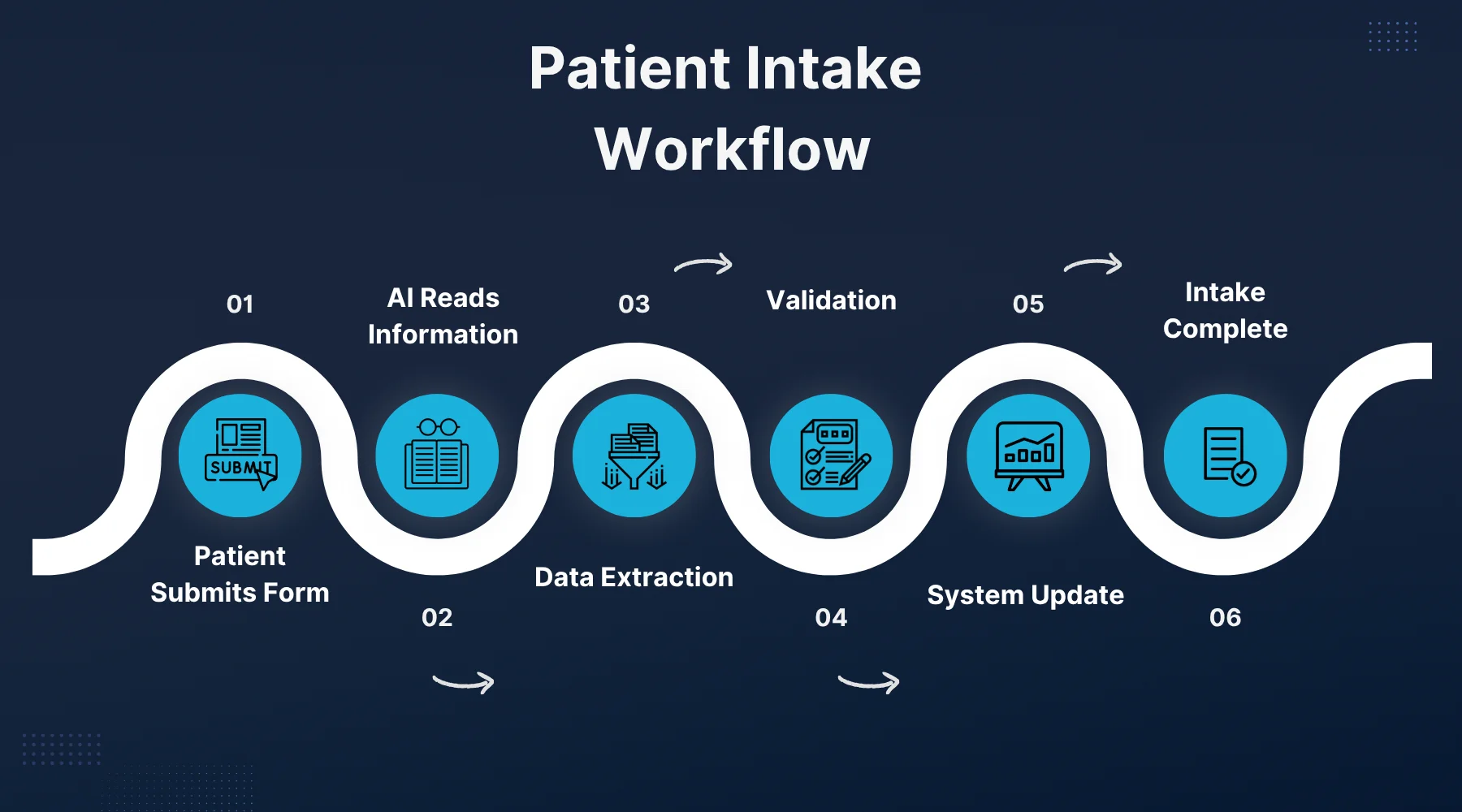
For Canadian healthcare providers operating under PHIPA, the system is designed with data residency and consent requirements built in. The AI does not replace the clinician. It removes the paperwork so the clinician can focus on the patient.
2. AI-Powered Lead Qualification Bot
Sales teams waste enormous amounts of time on leads that were never going to buy. Responding to inquiries, booking discovery calls, gathering basic information, and then discovering thirty minutes in that the prospect is the wrong fit, the wrong budget, or the wrong stage.
An AI lead qualification bot handles that entire first layer. When a lead submits a form, starts a chat, or sends an email, the AI engages immediately. It asks the right qualifying questions, collects the answers, scores the lead based on your criteria, and either books a call with a sales rep for the qualified leads or routes others to self-serve resources.
Your sales team only talks to people who are genuinely ready to buy. Response time drops from hours to seconds. And the leads that were going to say no anyway are handled without anyone on your team touching them.
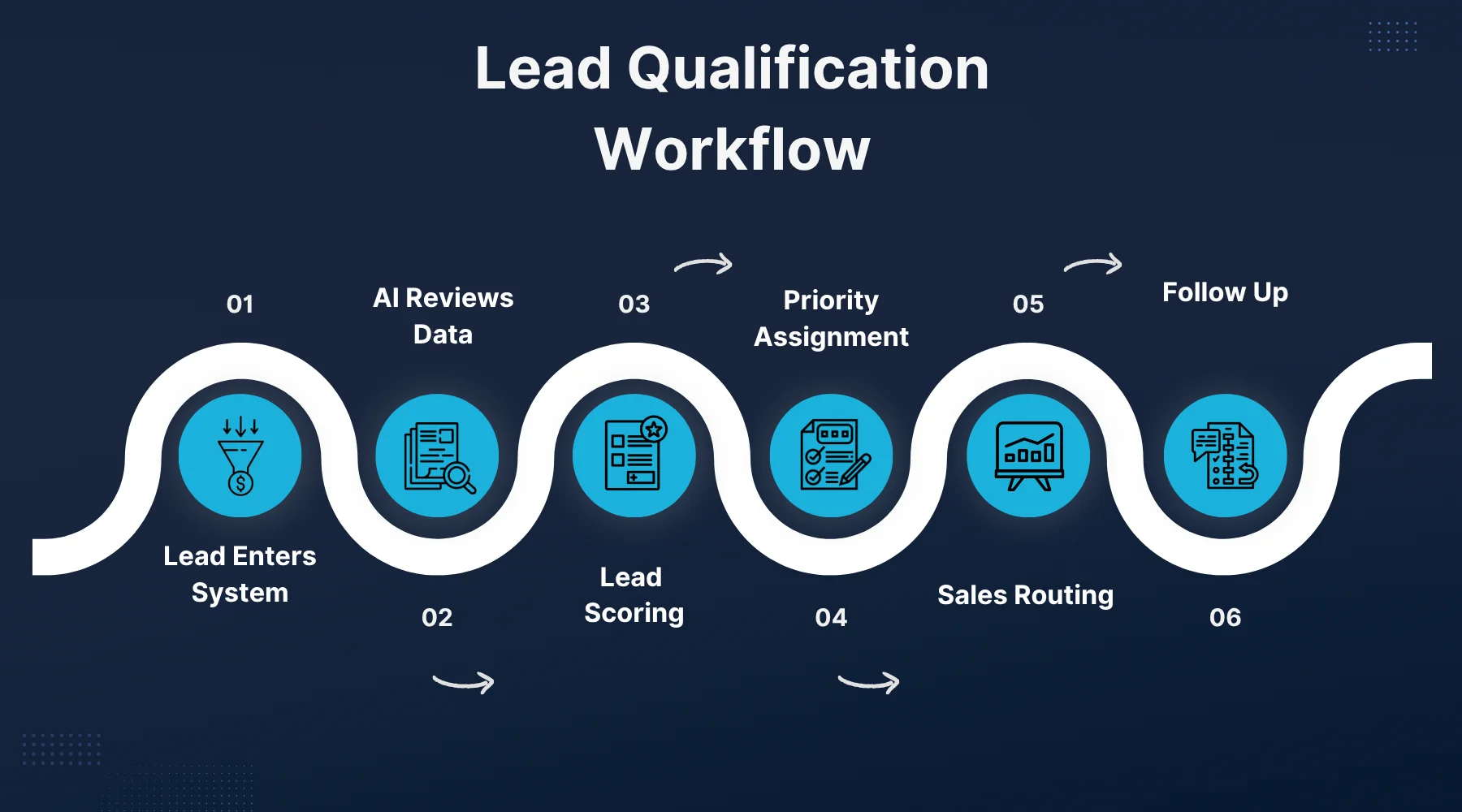
This is one of the highest-ROI AI use cases for Canadian businesses because the impact is directly visible in the sales pipeline. More qualified conversations. Less time wasted. Higher conversion rates from the leads that matter.
3. AI Document Review and Summary Tool
Every professional services business deals with documents. Contracts, proposals, reports, compliance filings, legal briefs, financial statements. Reading, summarising, and extracting key information from these documents takes hours of skilled staff time per week.
An AI document review and summary tool reads a document and returns a structured summary in seconds. It highlights key clauses, flags unusual terms, pulls out dates and obligations, identifies risks, and generates a plain-language overview that a non-specialist can act on immediately.
For a legal team reviewing fifty contracts a month, this cuts review time by more than half. For a finance team processing monthly reports across multiple business units, the time saving is immediate and measurable. For any team that regularly deals with long, complex documents, the AI does the first pass so the human only needs to review what matters.
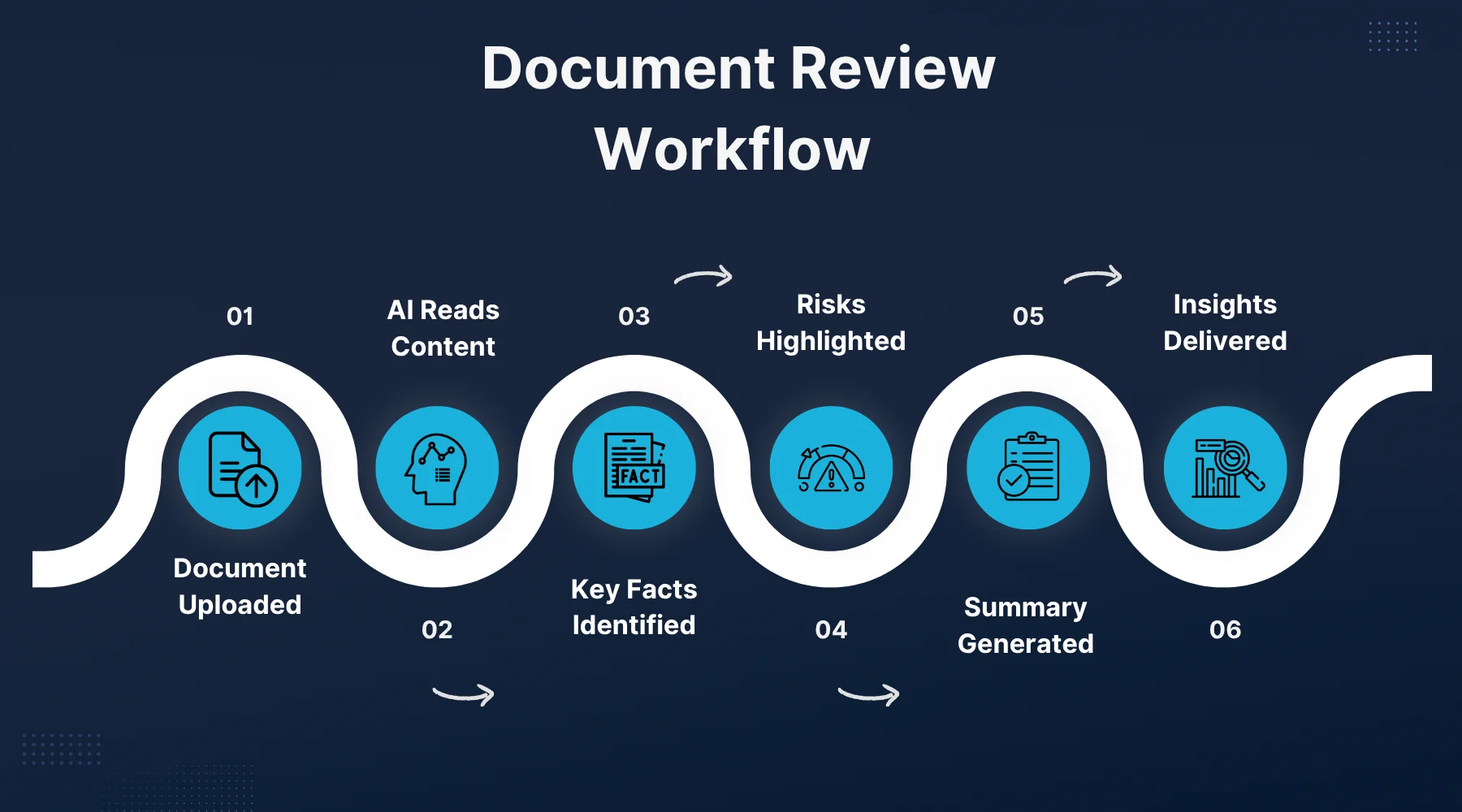
This is one of the most versatile AI business use cases because documents exist in every industry. Healthcare, legal, finance, real estate, logistics, and government all have document review bottlenecks that this tool addresses directly.
4. AI Automated Product Description Writer for E-Commerce
Running an online store with a large catalog means writing a lot of product descriptions. For stores with hundreds or thousands of SKUs, this is one of the most time-consuming tasks in the entire operation. Writing accurate, engaging, SEO-friendly descriptions for every product is a full-time job.
An AI automated product description writer takes a product name, category, key specifications, and any other details you provide, and generates a complete, well-written product description in seconds. It can match your brand voice, include relevant keywords, adapt the tone for different product categories, and produce descriptions in multiple languages if your store serves more than one market.
A store that used to spend three days writing descriptions for a new collection can now do it in an afternoon. A business launching a new product line can have all descriptions live on the same day the products are ready to sell.
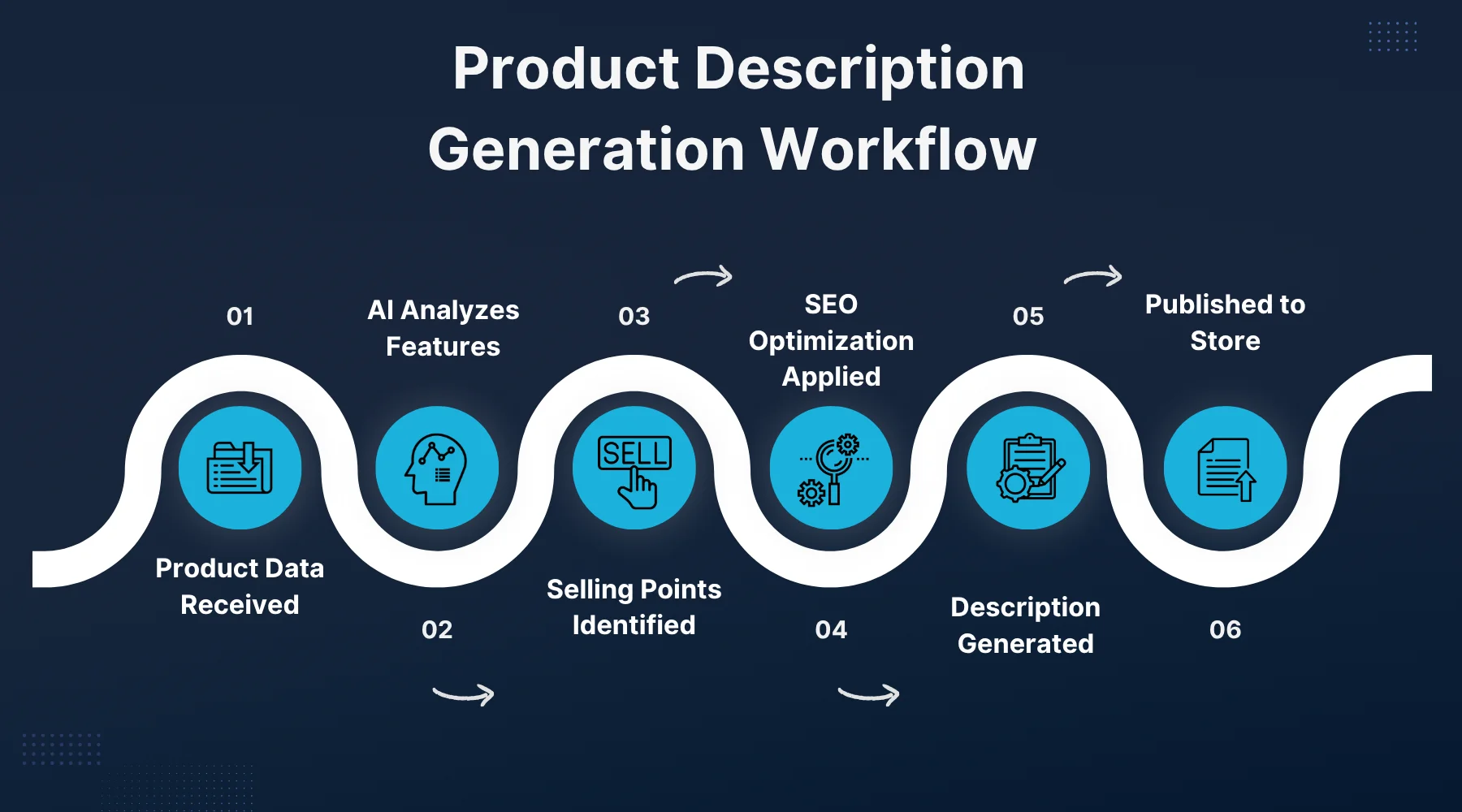
For Canadian e-commerce businesses competing with larger platforms, this use case is about speed and scale. You can move as fast as your inventory without your content team becoming the bottleneck.
5. 24/7 AI Customer Support Agent
Customer support is one of the biggest operational costs in any business that deals with a high volume of customer inquiries. Staff are expensive. Shifts have gaps. And most of the questions customers ask are the same questions, asked over and over, with answers that never change.
A 24/7 AI customer support agent handles the full first layer of customer contact. It answers FAQs, checks order status, processes basic requests, troubleshoots common issues, and escalates complex cases to human agents with a full transcript of what has already been discussed.
The customer gets an answer immediately, at any hour. The human support team handles only the cases that genuinely need human judgment. And your support operation can scale to handle ten times the volume without ten times the headcount.
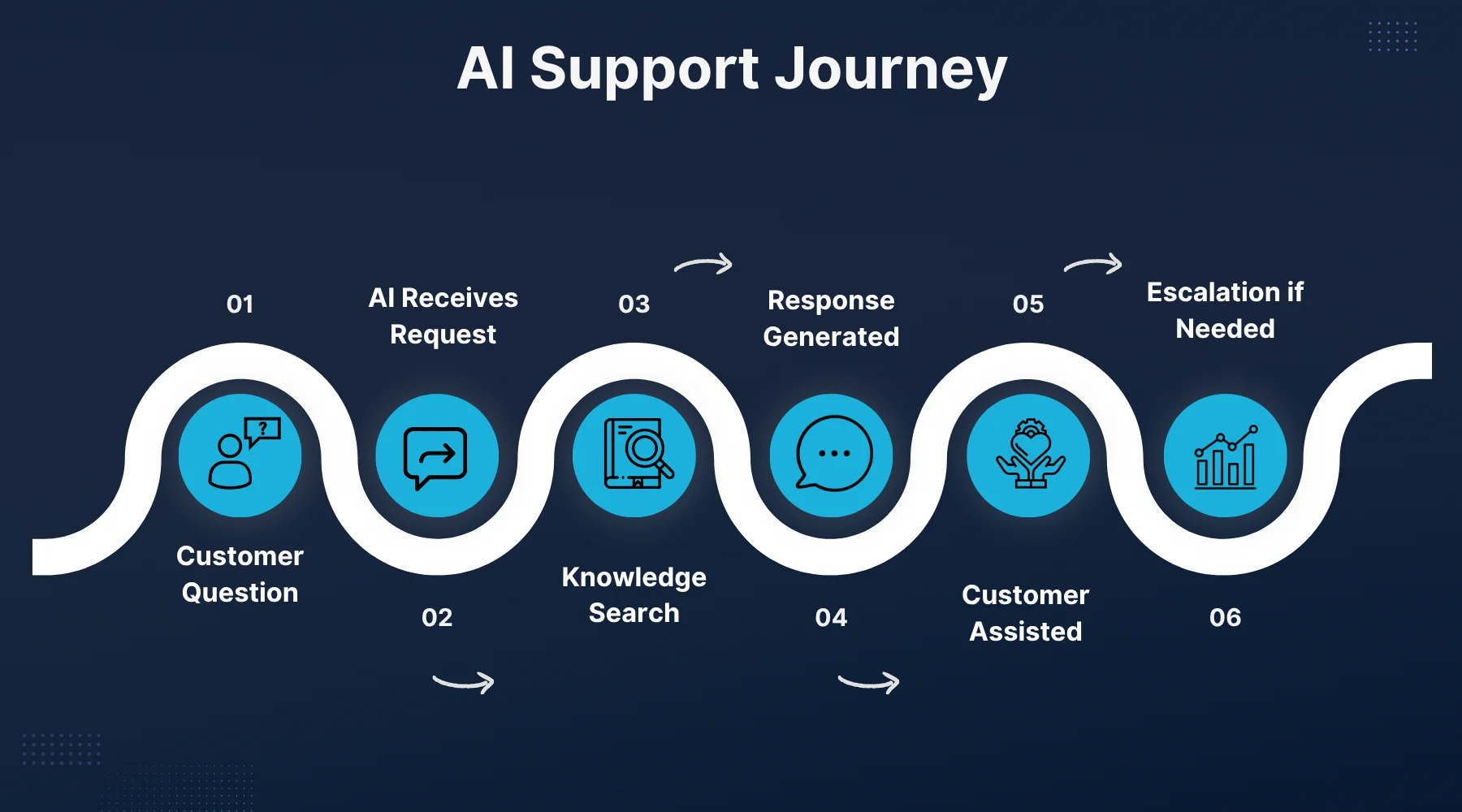
This is the most widely deployed AI use case across Canadian businesses because the ROI is immediate and the risk is low. You are not replacing human support entirely. You are removing the repetitive layer that was consuming most of your team’s time and giving them space to do the work that actually requires a person.
Why Canadian Businesses Are Adopting AI Automation Faster in 2026
Canadian businesses are moving toward AI automation for practical reasons, not trend-following.
Labour costs in Canada are high and rising. Finding and keeping skilled staff in most Canadian cities is competitive and expensive. AI automation does not replace skilled workers. It removes the repetitive layer of work from their plates so they spend their time on the tasks that actually require skill.
Compliance pressure is also a driver. PIPEDA governs how businesses handle personal data, and the provincial equivalents add additional requirements. AI systems built for Canadian businesses include data handling practices that meet these requirements by design, which reduces compliance risk rather than adding to it.
And competitive pressure from businesses that have already automated is real. A competitor that responds to leads in thirty seconds and handles customer inquiries at 2am has a structural advantage over one that operates on business hours alone. The gap between businesses using AI and businesses not using it is growing in 2026.
How to Choose the Right AI Use Case for Your Business
Not every AI use case is the right starting point for every business. Here is a simple framework for identifying where to begin.
Look at volume first. The best AI use cases are the ones where the same task happens many times a day or week. The more often a task repeats, the more time automation saves and the faster the ROI.
Separate customer-facing from back-office. Customer-facing AI (support agents, lead bots, intake automation) typically shows faster ROI because the impact is directly visible in customer experience and sales metrics. Back-office AI (document review, report generation, data processing) shows ROI in staff hours saved. Both are valid starting points. Choose based on where the pain is greatest.
Start with one workflow. Businesses that try to automate five things at once usually succeed at none of them. Pick the single workflow where AI would make the biggest difference. Build it. Measure the result. Then expand.
Consider agentic AI use cases for more complex workflows. If the task involves multiple steps, decisions at different points, or coordination across systems, an agentic AI workflow may be more effective than a simple automation rule. The five use cases above all have agentic versions for teams ready for the next level.
Set a clear success metric before you start. Hours saved per week. Response time reduction. Leads qualified per day. Pick a number you will measure against so you know whether the automation is working.
Frequently Asked Questions
The five AI use cases in this guide are not advanced experiments. They are practical tools that Canadian businesses are deploying right now to save real time on real tasks.
Patient intake automation. Lead qualification. Document review. Product description generation. 24/7 customer support. Each one addresses a specific, high-volume workflow that most businesses are still handling manually.
The businesses that move on these use cases in 2026 will have a structural efficiency advantage over those that wait. The technology is ready. The tools exist. The only remaining question is where your business starts.
If you want help identifying the right first AI use case for your specific operation, Python Technologies offers a free consultation to do exactly that.
Frequently Asked Questions
What are AI use cases?
AI use cases are specific, practical ways to apply artificial intelligence to real business tasks. Examples include automating customer support, qualifying sales leads, reviewing documents, generating product descriptions, and managing patient intake. They show where AI can save time, reduce cost, or improve accuracy in day-to-day business operations.
Which AI use case saves the most time for Canadian businesses?
It depends on your business type. For customer-facing businesses, a 24/7 AI customer support agent typically saves the most immediate time by handling the high-volume, repetitive first layer of customer contact. For professional services, AI document review saves the most skilled staff time. For sales teams, AI lead qualification has the highest revenue impact per hour saved.
Do I need technical staff to use these AI tools?
Not always. Many of the tools we build include dashboards that non-technical staff can use to monitor performance, review outputs, and manage settings. More complex integrations with your existing systems require engineering work during setup, but day-to-day operation can be handled by your existing team after launch.
Are these AI use cases suitable for small businesses in Canada?
Yes. Several of these use cases are particularly well-suited to small businesses because the ROI is largest when a small team gets significant time back. A five-person support team that eliminates two hours of repetitive work per person per day gains the equivalent of a new full-time employee without the hiring cost.
How long does it take to implement one of these AI solutions?
A single, well-defined use case typically takes 4 to 8 weeks from scoping to deployment. This includes integrating the AI with your existing tools, testing outputs, and setting up monitoring. More complex builds take longer. The clearer the scope at the start, the faster the delivery.
Categories
- Agentic AI (3)
- AI (1)
- AI & Automation (2)
- AI Automation (2)
- Artificial Intelligence (3)
- Best AI Agents in 2026 (1)
- Business Automation (1)
- Business Technology (2)
- Canada Tech & Business (2)
- Cloud Computing (1)
- Custom Development (2)
- Custom Software Development (1)
- Custom Software Development Company (1)
- DevOps (1)
- Digital Transformation (1)
- Industry Insights (2)
- Kubernetes (1)
- LLM Integration services (1)
- Software Development (1)
- Tech Product Pricing (1)
Recent Posts
- All Posts
- Agentic AI
- AI
- AI & Automation
- AI Automation
- Artificial Intelligence
- Best AI Agents in 2026
- Business Automation
- Business Technology
- Canada Tech & Business
- Cloud Computing
- Custom Development
- Custom Software Development
- Custom Software Development Company
- DevOps
- Digital Transformation
- Industry Insights
- Kubernetes
- LLM Integration services
- Software Development
- Tech Product Pricing
- Back
- Generative AI




About
Menu
Locations
© 2026 – Python Technologies. All Rights Reserved.