
Automated Product Description Writer Use Case
Overview
A Generative AI & LLM Integration Use Case like automated product description writing helps businesses create high quality product content faster and more efficiently. Instead of spending hours writing descriptions manually, AI can generate SEO ready copy from structured product data in seconds.
This use case explains how AI reads product information, creates optimized descriptions, and supports large scale content production. The goal is to reduce content creation time, improve consistency, and help businesses bring products to market faster.
The Problem
Creating product descriptions is one of the most time consuming tasks for ecommerce teams, marketers, and product managers. Every product needs clear, informative, and engaging copy that helps customers understand its features and benefits. When businesses manage hundreds or thousands of products, this process quickly becomes overwhelming.
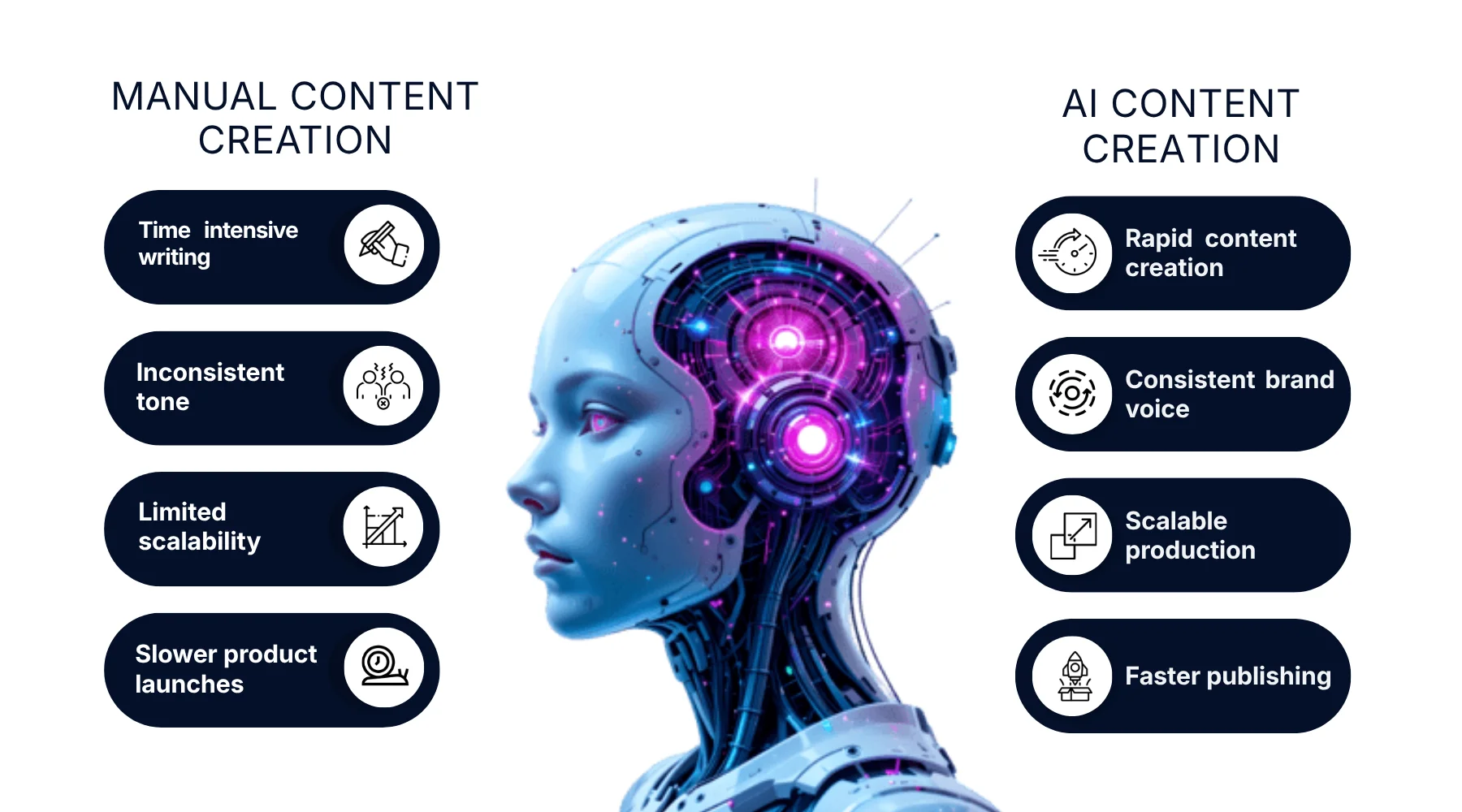
Many teams rely on manual writing processes. Writers must review product specifications, understand the product’s value, and create unique descriptions for every item. This requires significant time and effort, especially when product catalogs are updated frequently.
Consistency is another common challenge. Different writers may use different styles, tones, or formats. As a result, product pages can feel disconnected and inconsistent. This affects the customer experience and can make a brand appear less professional.
SEO requirements add another layer of complexity. Product descriptions need to include relevant keywords while remaining natural and helpful for readers. Balancing search optimization with readability requires skill and experience. When content is rushed, businesses often end up with descriptions that either lack important keywords or feel unnatural.
Some companies attempt to speed up the process by copying manufacturer descriptions. Unfortunately, duplicate content can reduce search visibility and make it difficult for products to stand out from competitors. Customers may also see the same content across multiple websites, reducing trust and engagement.
As product catalogs expand, the challenge becomes even greater. More products mean more content, more updates, and more pressure on content teams. This can slow down product launches, delay marketing campaigns, and limit growth opportunities.
The AI Solution
Automated product description writing uses generative AI and large language models to transform product data into polished, SEO friendly content automatically.
Trigger
Writing product copy takes your team too long.
AI Action
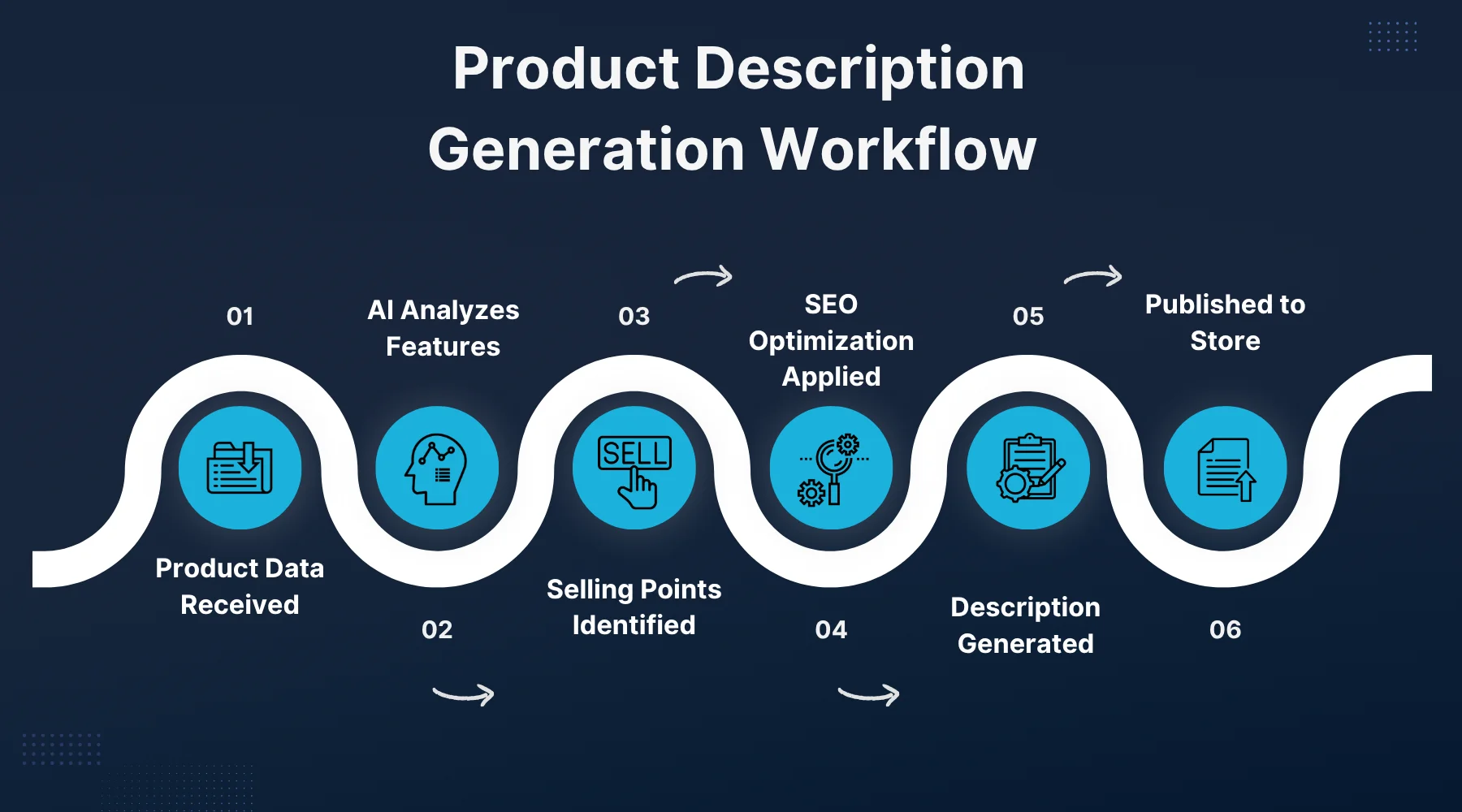
- Collect product information: The system gathers data from spreadsheets, product databases, supplier feeds, or ecommerce platforms.
- Analyze product attributes: The AI reviews specifications such as features, dimensions, materials, colors, technical details, and intended use.
- Identify key selling points: The system determines which features provide the greatest value to customers and should be highlighted.
- Apply brand guidelines: The AI follows predefined tone of voice, writing style, and messaging standards to ensure consistency.
- Generate SEO optimized content: The system creates descriptions that naturally include target keywords while maintaining readability.
- Create customer focused messaging: The AI transforms technical specifications into benefits that customers can easily understand.
- Adapt content for different channels: The system can generate versions for product pages, marketplaces, catalogs, and marketing materials.
- Review content quality: The AI checks grammar, structure, clarity, and keyword placement before finalizing the description.
- Publish or export content: The completed descriptions are sent to ecommerce platforms, content management systems, or product databases.
- Continuously improve output: The system learns from performance data and feedback to produce more effective content over time.
Outcome
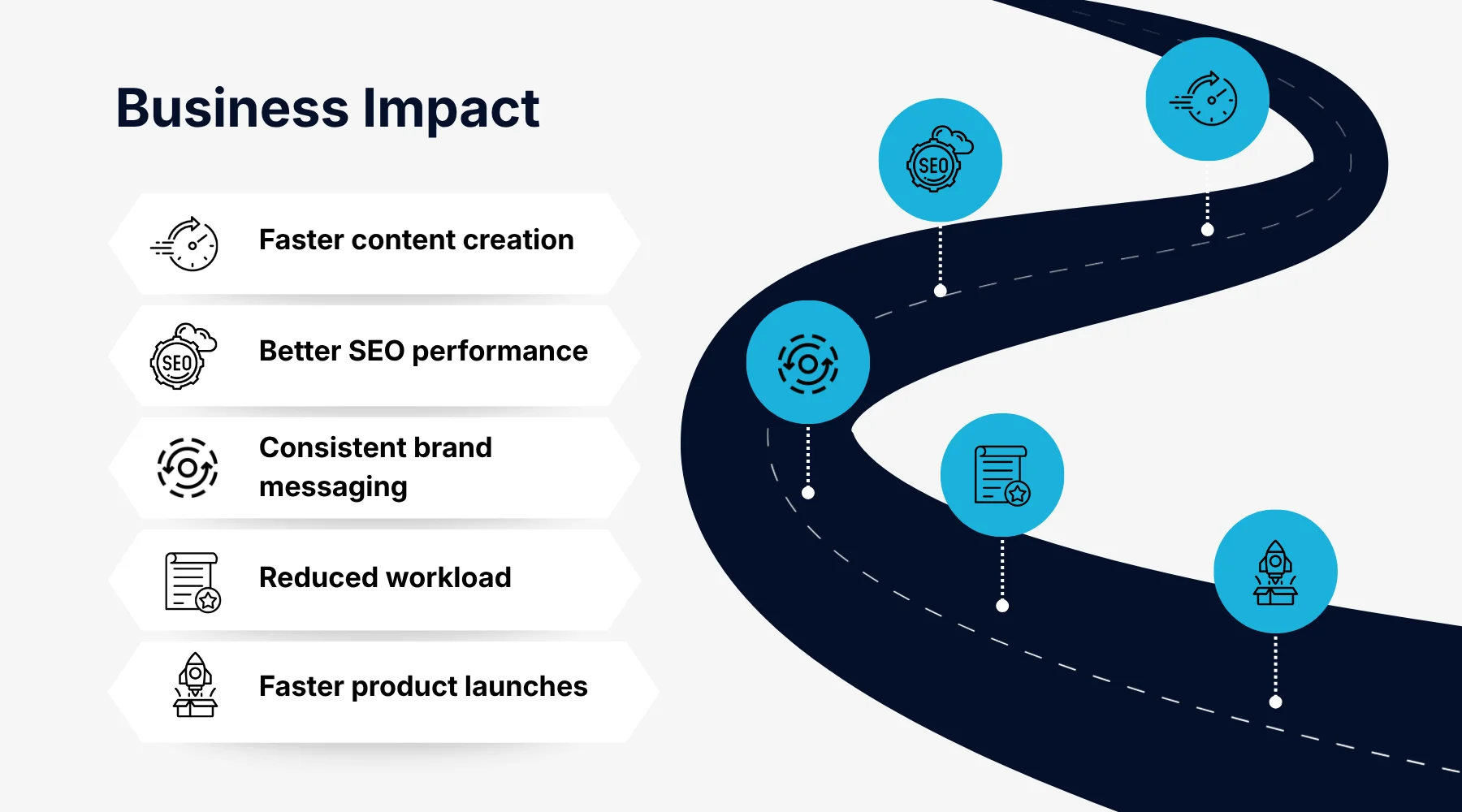
With automated product description writing in place, businesses can create content at a scale that would be difficult to achieve manually. Product descriptions that once required hours of work can now be generated in minutes, allowing teams to focus on higher value activities.
Content consistency improves significantly. Every product description follows the same brand voice, structure, and quality standards. This creates a more professional and trustworthy shopping experience for customers.
SEO performance also benefits from automation. Product descriptions can be optimized with relevant keywords while remaining natural and informative. This helps products appear in search results and increases opportunities for organic traffic.
Another major advantage is speed. New products can be published faster because content creation is no longer a bottleneck. Businesses can launch products, update catalogs, and respond to market changes more efficiently.
The system also reduces operational costs by minimizing repetitive writing tasks. Content teams can spend more time on strategy, campaign development, and content optimization rather than producing large volumes of routine product copy.
Over time, businesses gain a scalable content creation process that supports growth without requiring proportional increases in resources. Whether managing hundreds or thousands of products, the system can maintain quality and efficiency.
Product Description Generation Workflow
Manual vs AI Content Creation
Business Impact
Why Trust This Approach
Generative AI and large language models are already being used across ecommerce, retail, manufacturing, and digital commerce environments to create content at scale. These systems are trained to understand language patterns, product attributes, and customer communication styles.
The technology can follow predefined instructions and brand guidelines, ensuring that generated content aligns with business standards. This helps maintain quality while significantly reducing the amount of manual effort required.
Transparency is also important. Businesses can review, edit, and approve content before publication. Human oversight remains part of the process, allowing organizations to maintain control over messaging and compliance requirements.
Modern AI systems can integrate directly with e-commerce platforms, product information management systems, and content management tools. This creates a streamlined workflow that supports accuracy and efficiency.
Many organizations have already implemented AI driven content generation and reported improvements in productivity, content consistency, and speed to market. These results demonstrate the practical value of this approach in real business environments.
Conclusion
Automated product description writing helps businesses overcome one of the biggest challenges in e-commerce and product marketing: creating high quality content at scale.
By using generative AI and large language models, organizations can transform product data into engaging, SEO ready descriptions in a fraction of the time required by traditional methods. This improves efficiency, consistency, and search visibility while reducing the burden on content teams.
The benefits extend beyond faster content creation. Businesses can launch products more quickly, maintain a stronger brand voice, and provide customers with clearer information that supports purchasing decisions.
As product catalogs continue to grow, scalable content creation becomes increasingly important. Automated product description writing provides a reliable solution that supports growth while maintaining quality and performance.
In simple terms, it helps businesses create better product content faster, improve search visibility, and scale operations with confidence.