
Internal Knowledge Base Assistant
Overview
An Internal Knowledge Base Assistant helps employees find answers to common workplace questions without waiting for HR or management. Instead of searching through documents, emails, or shared folders, employees can ask questions in plain language and receive instant responses.
This Generative AI & LLM Integration Use Case demonstrates how organizations can use AI to provide employees with quick access to company policies, procedures, benefits information, onboarding materials, and other internal resources. The goal is to reduce repetitive HR inquiries, improve employee experience, and make information easier to access across the organization.
The Problem
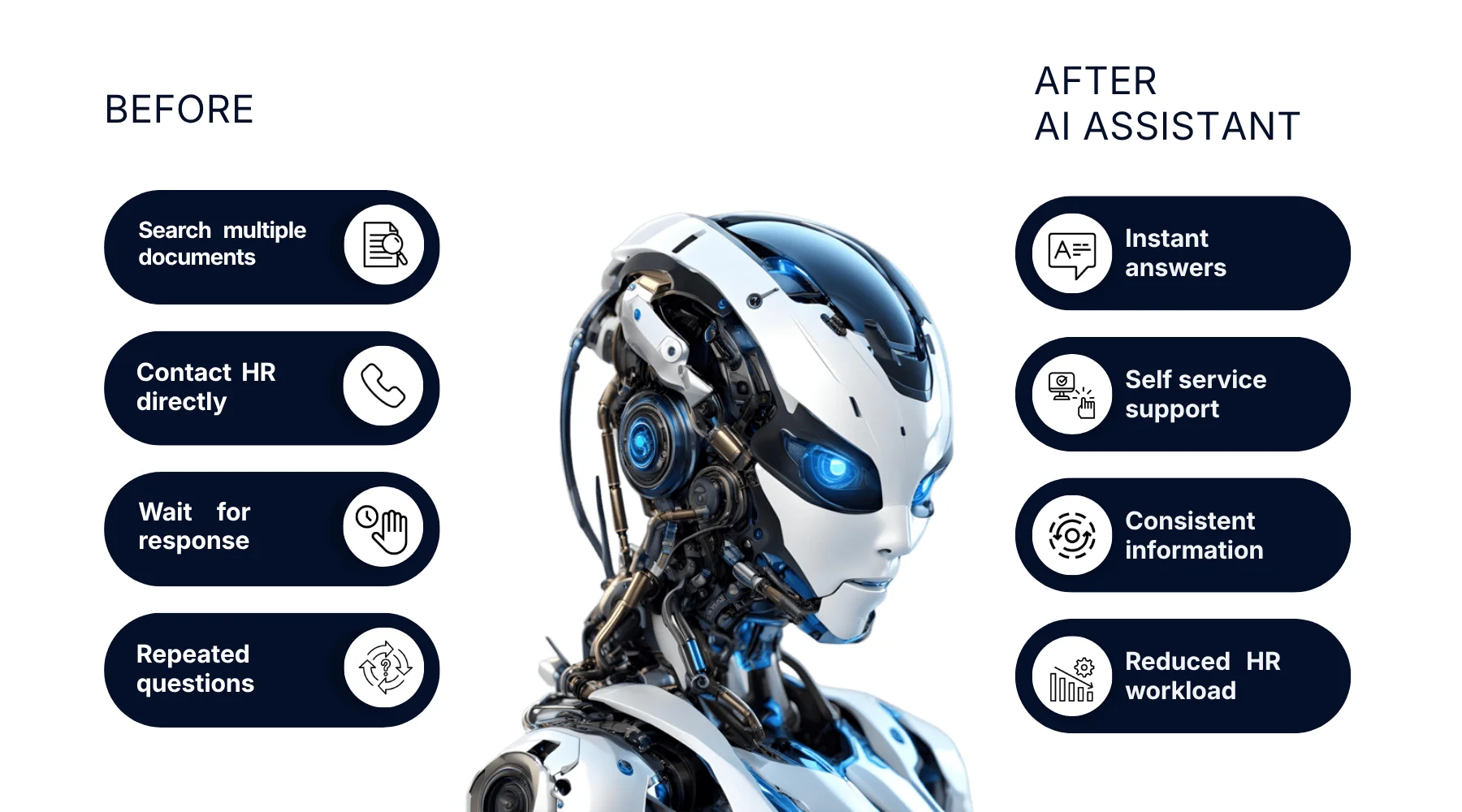
HR teams spend a significant amount of time answering the same questions repeatedly. Employees often need information about leave policies, benefits, work schedules, reimbursement processes, onboarding procedures, company guidelines, and other workplace topics. While this information may already exist in company documents, employees often struggle to find it quickly.
Searching through policy manuals, shared drives, email threads, and internal portals can be frustrating and time consuming. Employees may not know where information is stored or which document contains the answer they need. As a result, they often contact HR directly for help.
This creates unnecessary workload for HR teams. Instead of focusing on strategic initiatives such as employee engagement, talent development, and workforce planning, HR staff spend valuable time responding to repetitive questions. As the organization grows, the volume of requests increases, making the problem even more difficult to manage.
Response times can also become inconsistent. Employees may have to wait hours or even days for answers, especially during busy periods. This delay can affect productivity and create frustration among staff members who need information to complete their work.
Another challenge is information consistency. Different employees may receive slightly different answers depending on who responds to their request. This can create confusion and lead to misunderstandings about company policies or procedures.
As organizations expand, maintaining fast and consistent communication becomes increasingly difficult. Without a better system, HR teams face growing workloads while employees continue to struggle with accessing information efficiently.
The AI Solution
An Internal Knowledge Base Assistant uses Generative AI and Large Language Models to provide instant answers based on company-approved information. The assistant is trained on internal documents and can understand employee questions in natural language.
Trigger
Employees repeatedly ask HR or internal teams the same basic questions.
AI Action
- Access internal knowledge sources: The AI connects to approved company documents, policies, employee handbooks, training materials, and internal resources.
- Process and organize information: The system indexes and structures content so that information can be retrieved quickly and accurately.
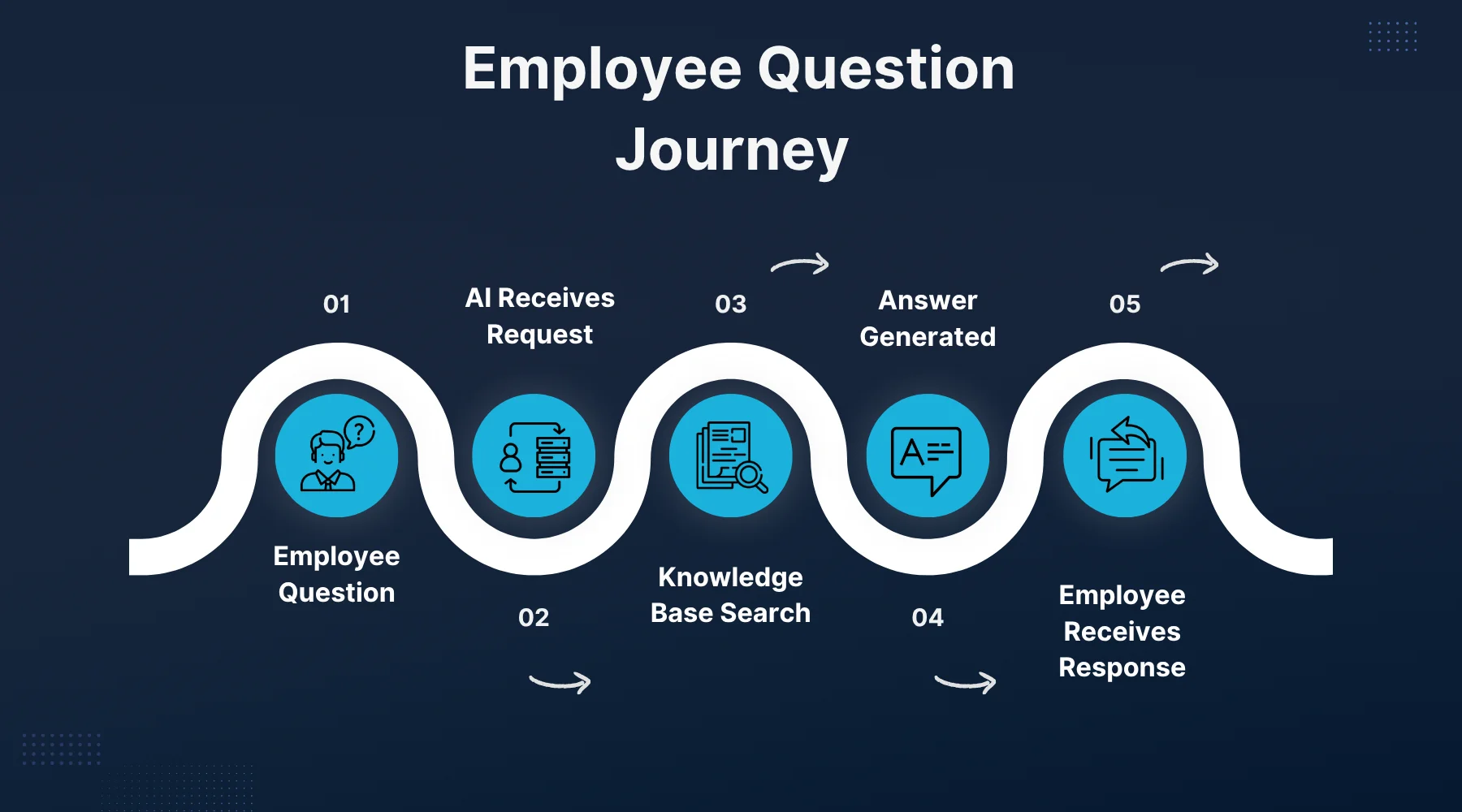
- Understand employee questions: Employees ask questions in natural language through chat, email, or an internal portal. The AI interprets the intent behind each request.
- Search relevant content: The system scans approved documents and identifies the most relevant information related to the question.
- Generate a clear response: The AI creates an easy-to-understand answer using information from company-approved sources.
- Provide supporting references: The system can include links, document names, or policy references so employees can review the original source if needed.
- Handle follow up questions: Employees can ask additional questions, and the AI maintains context to provide more detailed guidance.
- Escalate complex requests: If a question requires human review or involves sensitive matters, the system routes the request to the appropriate HR representative.
- Track common questions: The AI records frequently asked questions and identifies trends that can help improve documentation.
- Continuously update knowledge: As policies and documents change, the system updates its knowledge base to ensure responses remain accurate.
Outcome
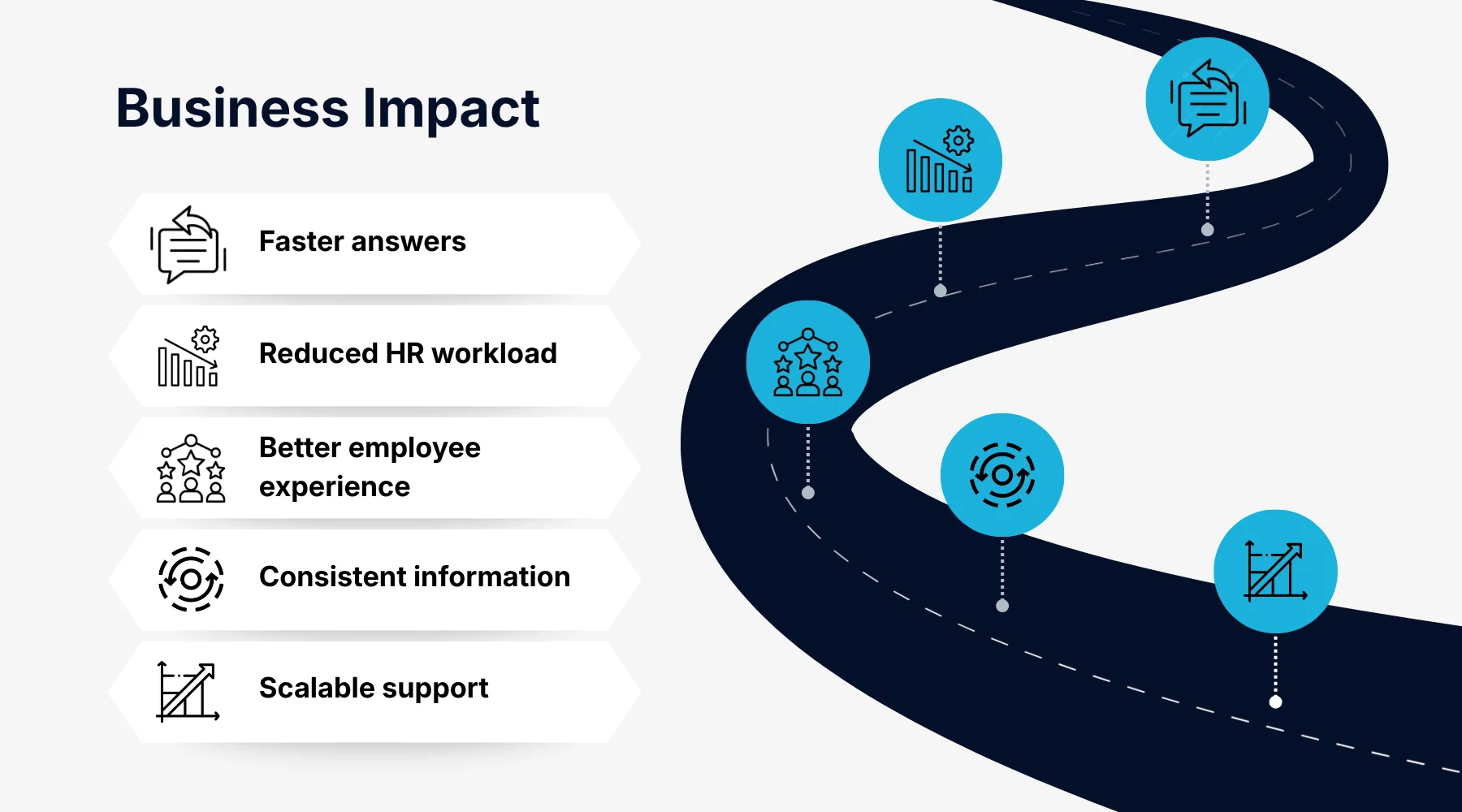
With an Internal Knowledge Base Assistant in place, employees can access information immediately without waiting for a response from HR. This improves productivity because staff members can quickly find the answers they need and continue with their work.
HR teams experience a significant reduction in repetitive inquiries. Questions that previously consumed hours of administrative time are handled automatically by the AI assistant. This allows HR professionals to focus on higher value activities that contribute more directly to organizational success.
Consistency also improves across the organization. Every employee receives answers based on the same approved documentation. This reduces confusion and helps ensure that company policies are communicated accurately.
Employee satisfaction often increases because information becomes easier to access. Instead of navigating multiple systems or waiting for responses, employees can receive answers within seconds. This creates a more positive workplace experience and reduces frustration.
The organization also benefits from better knowledge management. Important information becomes easier to find and use, which helps preserve institutional knowledge and reduces dependency on specific individuals.
As the company grows, the assistant can support increasing numbers of employees without requiring additional administrative resources. This makes the solution highly scalable and cost effective.
Employee Question Journey
Before vs After AI Assistant
Business Impact
Why Trust This Approach
Internal Knowledge Base Assistants are built on proven Generative AI and Large Language Model technologies that are already being adopted by organizations worldwide. These systems are designed to understand natural language, retrieve information efficiently, and provide responses in a conversational format.
The assistant only uses approved company documents and authorized information sources. This helps ensure that answers remain aligned with company policies and procedures. Organizations can control what information is available and update content whenever policies change.
Transparency is another important advantage. Responses can include references to the source documents used to generate the answer. This allows employees to verify information and build confidence in the system.
Security controls can also be applied to protect sensitive information. Access permissions ensure that employees only receive information appropriate for their role and authorization level.
Many organizations have successfully implemented internal AI assistants and have reported improvements in productivity, employee satisfaction, and operational efficiency. These results demonstrate that the approach is practical, scalable, and effective.
Conclusion
An Internal Knowledge Base Assistant transforms how employees access information within an organization. Instead of relying on HR teams to answer repetitive questions, employees can receive accurate answers instantly through a simple conversation with AI.
By connecting Generative AI to company knowledge sources, organizations can reduce administrative workload, improve consistency, and make information easier to access. This creates a better experience for employees while allowing HR teams to focus on more strategic responsibilities.
The benefits extend beyond efficiency. The system improves knowledge sharing, supports employee productivity, and helps maintain consistent communication across the organization.
As businesses continue to grow and manage larger volumes of information, providing fast and reliable access to knowledge becomes increasingly important. An Internal Knowledge Base Assistant offers a scalable solution that supports both employees and the organization as a whole.
In simple terms, it helps employees find answers faster while giving HR teams more time to focus on what matters most.