
AI-Powered Lead Qualification Bot
Overview
A Generative AI & LLM Integration Use Case for lead qualification helps sales teams focus on the prospects most likely to become customers. Instead of spending time reviewing every lead manually, AI analyzes lead data, engagement history, and buying signals to identify the highest value opportunities.
This use case explains how an AI-powered lead qualification bot evaluates incoming leads, scores them based on predefined criteria, and routes the best opportunities to the right sales representatives. The goal is to improve sales efficiency, increase conversion rates, and reduce time wasted on unqualified leads.
The Problem
Sales teams often receive leads from multiple channels, including websites, advertising campaigns, social media, events, referrals, and email marketing. While generating leads is important, not every lead is ready to buy. Many prospects are still researching options, while others may not be a good fit for the business at all.
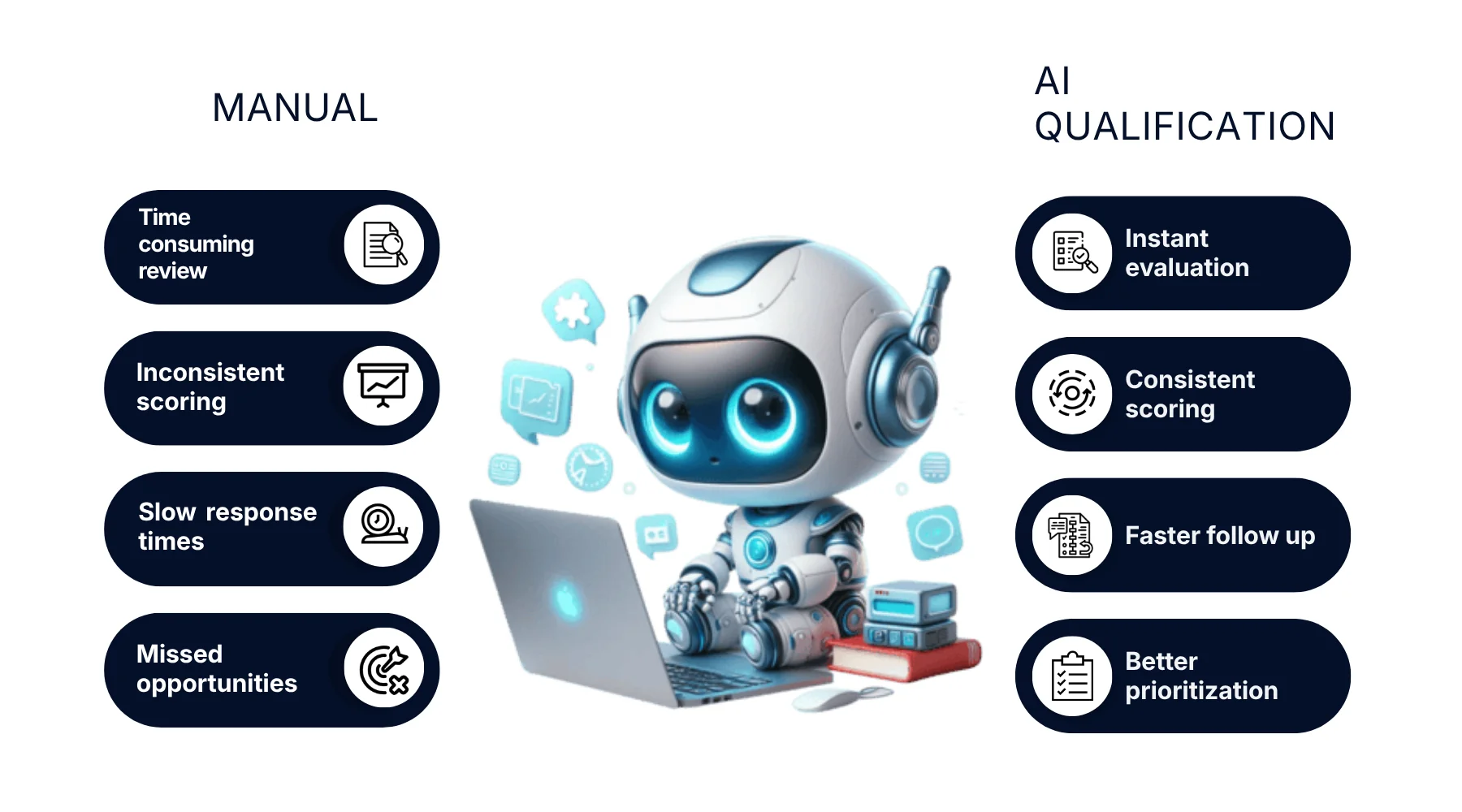
Without an effective qualification process, sales representatives spend a significant amount of time reviewing leads manually. They must evaluate contact details, company information, engagement history, and other factors before deciding whether a lead deserves attention. This process is repetitive, time-consuming, and often inconsistent.
Another challenge is prioritization. When every lead enters the same pipeline, high value opportunities can be buried among lower-quality prospects. Sales teams may respond too slowly to the leads that matter most, reducing the chances of conversion.
Manual qualification can also introduce bias and inconsistency. Different sales representatives may evaluate leads differently, resulting in varying levels of follow up quality. Some promising leads may be overlooked while less qualified leads receive unnecessary attention.
As lead volumes increase, these problems become even more difficult to manage. More leads mean more administrative work, longer response times, and greater pressure on sales teams. Instead of focusing on building relationships and closing deals, representatives spend valuable time sorting through data.
The AI Solution
An AI-powered lead qualification bot automatically evaluates incoming leads and identifies which prospects deserve immediate attention. It creates a consistent and scalable qualification process that supports sales growth.
Trigger
Your sales team wastes time on bad leads.
AI Action
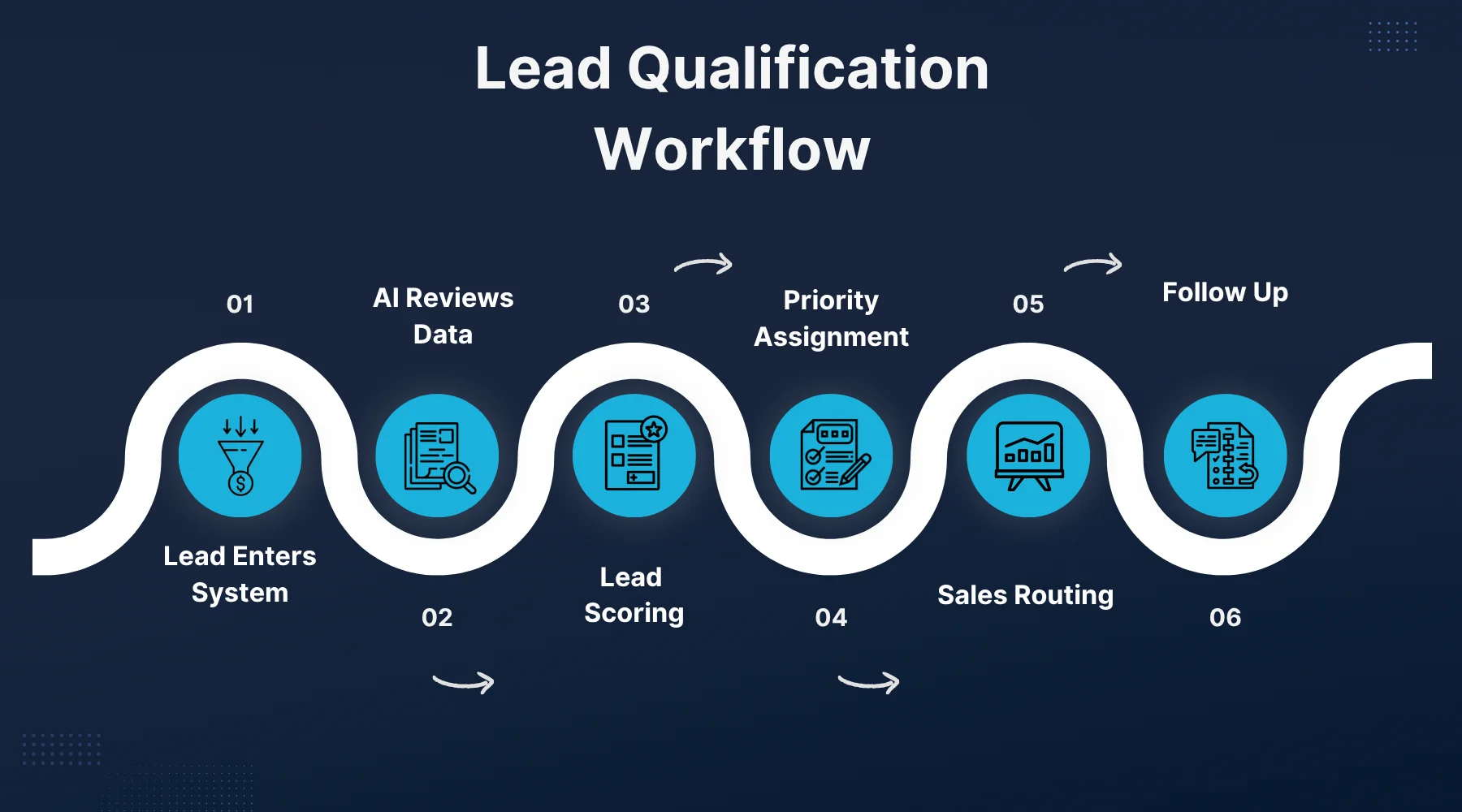
- Capture lead information: The system gathers data from forms, CRM records, campaigns, emails, and other lead sources.
- Analyze lead details: The AI reviews information such as company size, industry, location, job title, and business requirements.
- Evaluate engagement activity: The system examines website visits, email opens, content downloads, form submissions, and other behavioral signals.
- Identify buying intent: The AI looks for indicators that suggest a lead may be actively researching solutions or preparing to make a purchase decision.
- Score the lead automatically: Based on predefined rules and learned patterns, the system assigns a qualification score to each lead.
- Segment leads by priority: Leads are categorized into groups such as high priority, medium priority, and low priority.
- Route qualified leads: The system sends high value opportunities directly to the appropriate sales representative or team.
- Trigger follow up workflows: Tasks, reminders, notifications, or outreach sequences can be created automatically.
- Update CRM records: All lead scores, activities, and actions are recorded within the CRM for visibility and tracking.
- Continuously improve scoring models: The AI learns from sales outcomes and conversion patterns to improve future qualification accuracy.
Outcome
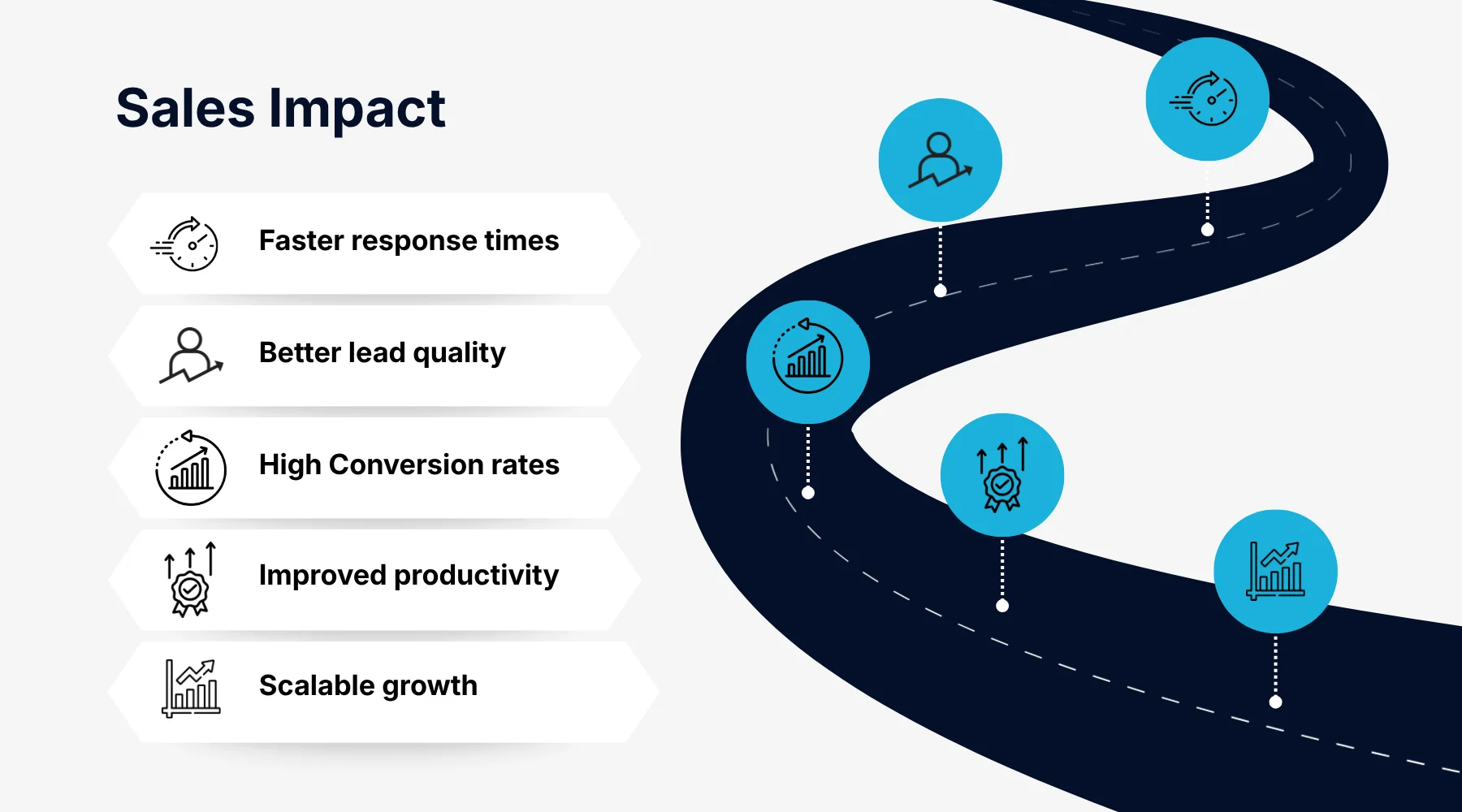
With an AI-powered lead qualification bot in place, sales teams spend less time reviewing unqualified prospects and more time engaging with leads that have a strong likelihood of converting. This improves productivity and allows representatives to focus their efforts where they can create the greatest impact.
Response times improve because qualified leads are identified and routed immediately. Instead of waiting for manual review, high potential prospects reach the right sales representative within minutes. This helps businesses engage prospects while interest is still high.
Lead quality visibility also improves. Sales teams gain a clearer understanding of which prospects are worth pursuing and why. This creates a more structured sales process and helps managers allocate resources effectively.
Conversion rates often improve because follow up becomes more focused and timely. Representatives can tailor conversations based on lead data, engagement history, and qualification insights provided by the system.
Another important benefit is scalability. As lead volumes grow, the AI continues to process and qualify leads consistently without increasing workload. Businesses can generate more opportunities without creating bottlenecks in the sales process.
Over time, the system becomes more effective as it learns from successful and unsuccessful sales outcomes. This continuous improvement helps organizations identify the leads most likely to become long term customers.
Lead Qualification Workflow
Manual vs AI Qualification
Sales Impact
Why Trust This Approach
AI-powered lead qualification combines machine learning, predictive analytics, and large language model capabilities to evaluate prospects more consistently than manual processes alone. These technologies are already being used across sales and marketing operations to improve lead management and conversion performance.
The system works with data rather than assumptions. By analyzing customer behavior, engagement patterns, and historical outcomes, it creates a structured process that helps sales teams focus on opportunities with the greatest potential.
Transparency is also important. Lead scores, qualification factors, and routing decisions can be reviewed and audited, allowing businesses to understand why certain leads are prioritized. This helps build confidence in the system and supports continuous improvement.
Security and data governance can be integrated into the workflow to ensure that customer information is handled responsibly and in accordance with company policies.
Many organizations have adopted AI-powered lead qualification to improve efficiency, reduce response times, and increase conversion rates. These real-world applications demonstrate the practical value of the approach.
Conclusion
AI-powered lead qualification transforms how businesses manage incoming opportunities. Instead of relying on manual reviews, the system automatically identifies which prospects deserve immediate attention and routes them to the right sales representatives.
By analyzing lead data, engagement signals, and buying intent, the AI creates a more efficient and consistent qualification process. This helps sales teams focus on meaningful conversations rather than administrative tasks.
The benefits include faster follow-up, better lead prioritization, improved conversion rates, and greater scalability. As lead volumes increase, the system continues to deliver consistent performance without adding operational complexity.
In simple terms, an AI-powered lead qualification bot helps businesses spend less time chasing poor leads and more time closing the right opportunities.