
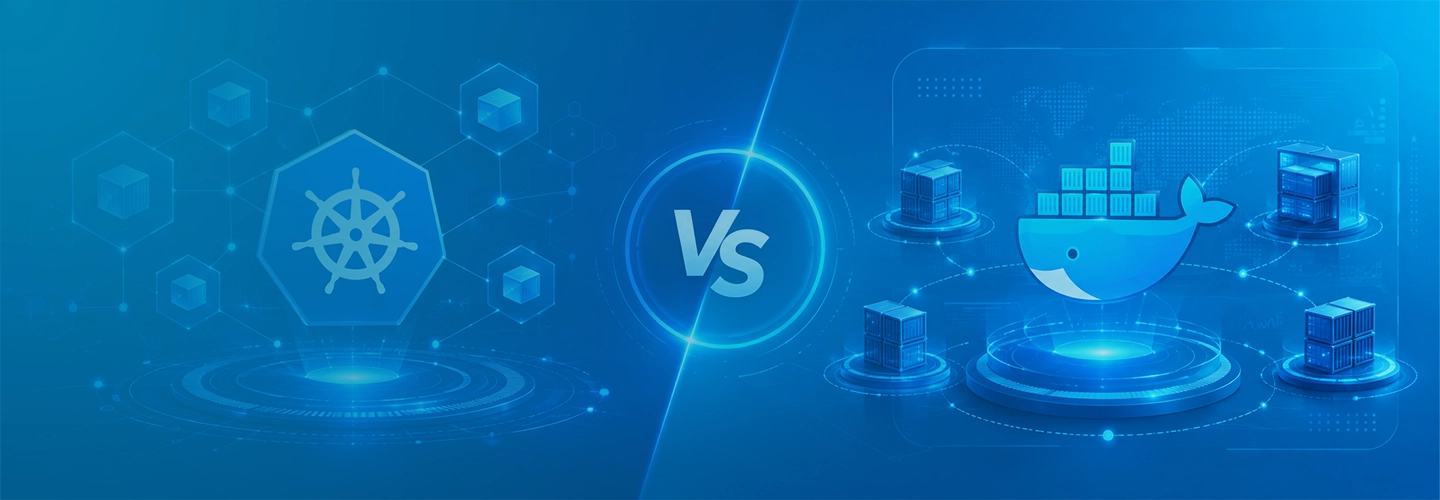
Kubernetes vs Docker Swarm: Which Should Canadian Teams Use in 2026?
Author: Python Technologies Date: 07/15/2026
Container orchestration is no longer optional for teams running modern software at scale. Whether you are a startup in Waterloo or an enterprise in Toronto, if you are deploying containerized applications, you eventually face the same question: Docker Swarm or Kubernetes?
Both tools solve the same core problem. You have containers. You need them to run reliably, scale when load increases, recover when something fails, and communicate with each other. Container orchestration tools handle all of that automatically, so you do not have to manage it manually.
But Docker Swarm and Kubernetes solve that problem very differently. One is fast to set up and easy to learn. The other is more powerful but significantly more complex. Choosing the wrong one wastes time and money. Choosing the right one gives your team a platform that supports your growth.
Key takeaways before we start:
- Docker Swarm favors simplicity and fast setup. Kubernetes offers flexibility and long-term scalability.
- Swarm works best for smaller teams and simpler workloads. Kubernetes suits complex, growing environments.
- Canadian businesses in regulated industries (healthcare, finance, government) almost always end up on Kubernetes.
- Platforms like Portainer and Rancher help manage either tool without needing every advanced feature upfront.
What Is Container Orchestration?
Before comparing the two tools, it helps to understand what they are both doing.
A container is a lightweight, self-contained package that holds an application and everything it needs to run: code, runtime, libraries, settings. Containers are portable and consistent across environments. What works on your laptop works in production.
The problem is that modern applications are not one container. They are dozens or hundreds of containers running together: web servers, databases, caches, background workers, APIs. Managing all of that by hand does not scale.
Container orchestration tools handle this automatically. They decide where each container runs, restart containers that crash, scale up when traffic increases, distribute load across instances, and handle updates without downtime.
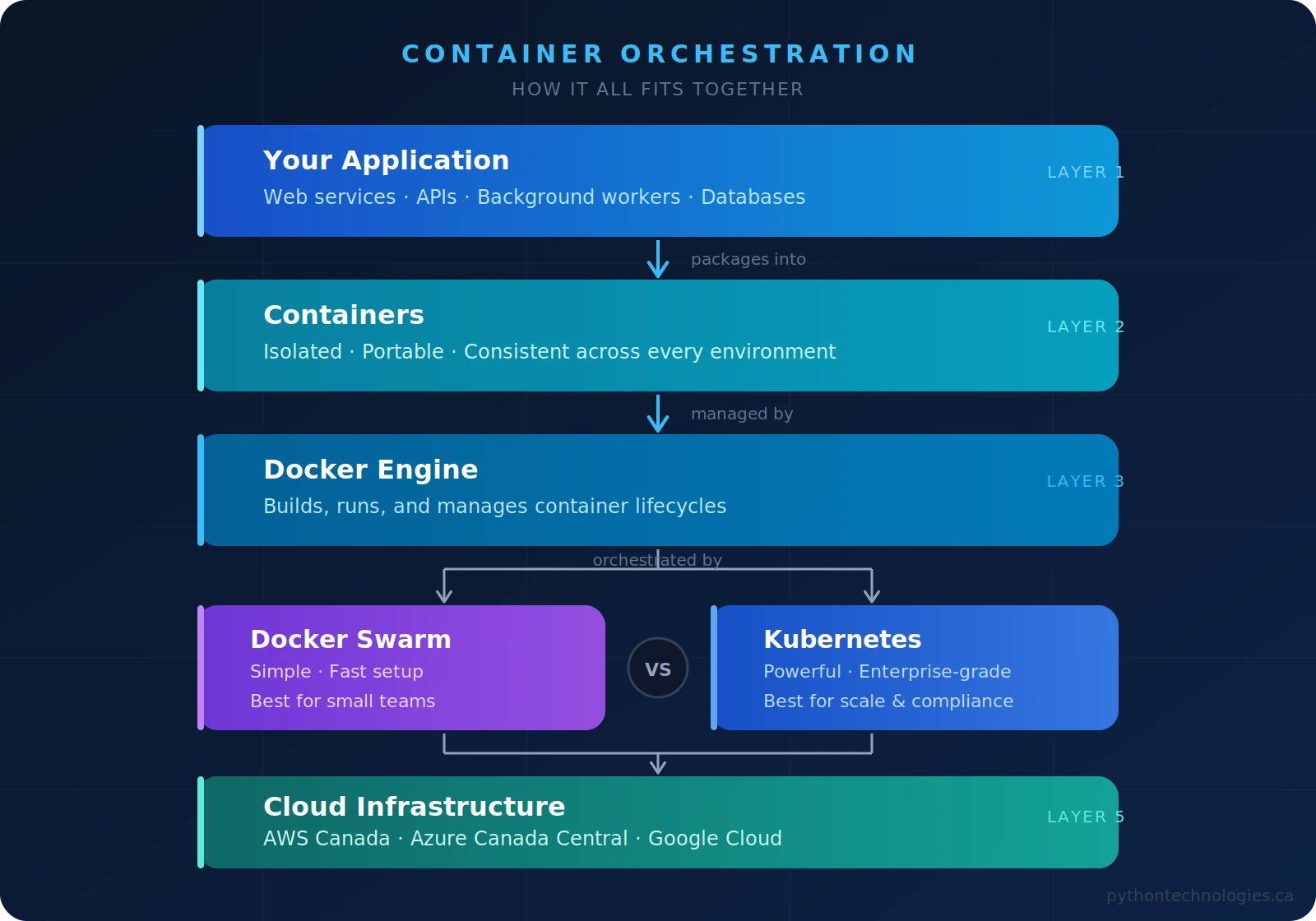
Docker is the tool that creates containers. Docker Swarm and Kubernetes are the tools that orchestrate them at scale. They sit above Docker in the stack, managing the cluster of machines those containers run on.
What Is Docker Swarm?
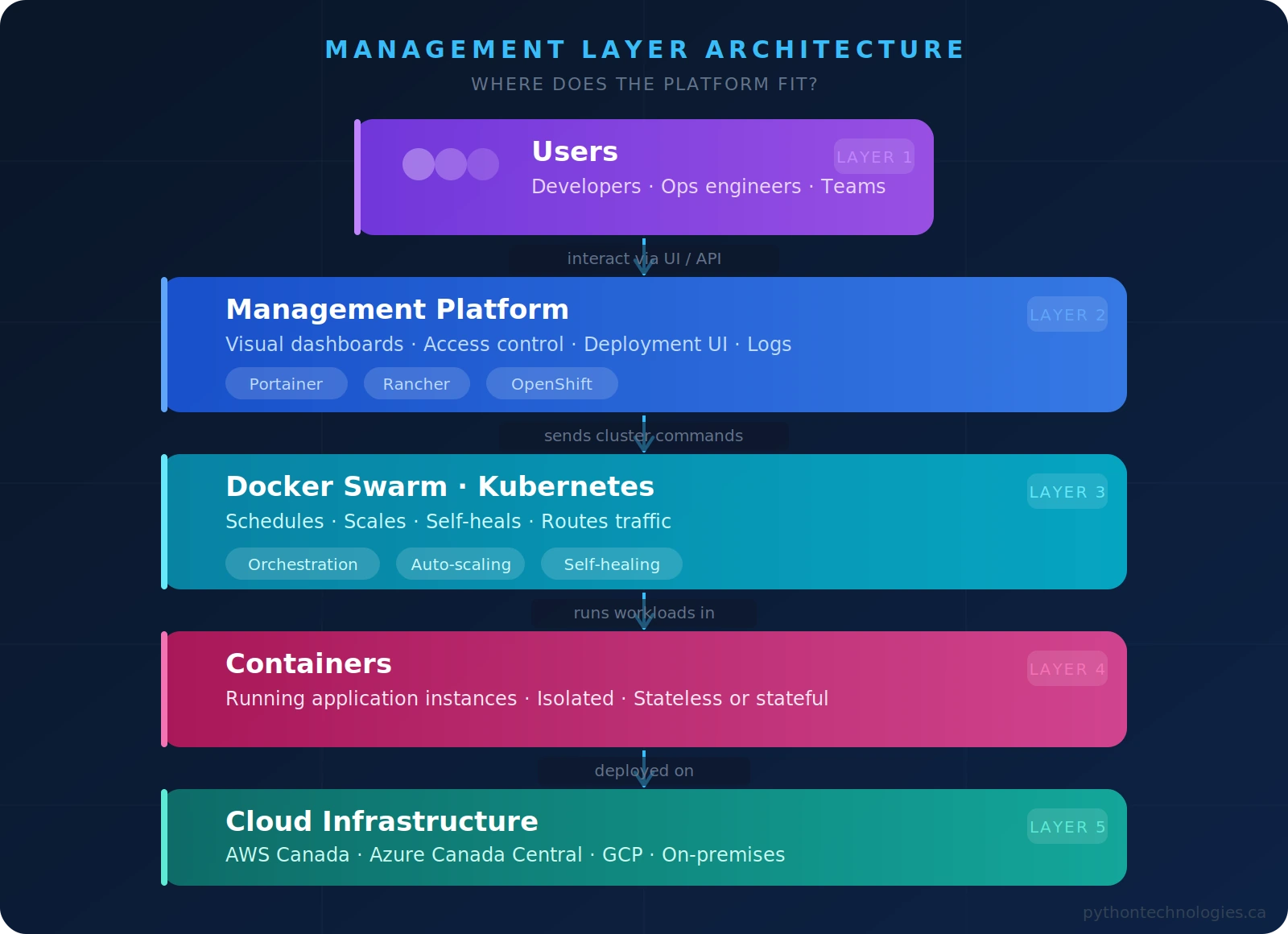
Docker Swarm is Docker’s built-in container orchestration tool. It turns a group of Docker hosts into a single cluster that you can manage as one unit.
Swarm uses a manager-worker model. Manager nodes handle scheduling decisions and cluster state. Worker nodes run the actual containers. When you deploy a service to Swarm, the manager decides which worker runs each container instance and monitors it to make sure it stays running.
Swarm uses the same Docker CLI and Docker Compose files you are already familiar with. If your team already knows Docker, Swarm adds very little new learning. You can have a working cluster running in under an hour.
Swarm handles the core orchestration needs well: service deployment, rolling updates, scaling, networking, service discovery, and basic load balancing. It does not handle the more advanced scenarios Kubernetes covers, but for many teams those scenarios never arise.
What Are Kubernetes?
Kubernetes (often shortened to K8s) is an open-source container orchestration system originally developed by Google. It is now maintained by the Cloud Native Computing Foundation and backed by every major cloud provider.
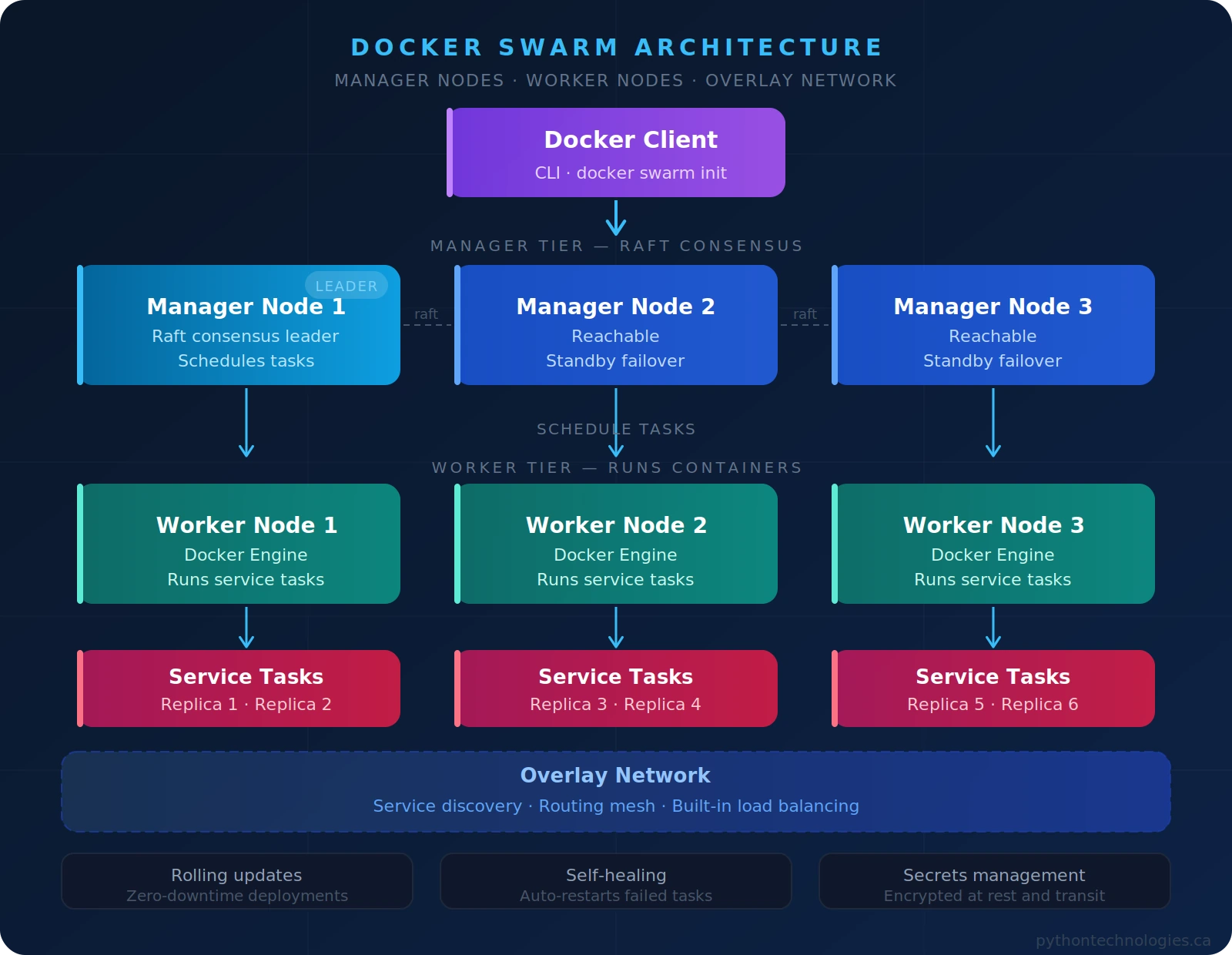
Kubernetes organises containers into Pods, which are the smallest deployable units. Pods run on Nodes (individual machines). Nodes are grouped into a Cluster. The Control Plane manages the cluster state and makes scheduling decisions. The Scheduler assigns Pods to Nodes based on resource availability and constraints.
Services provide stable networking between Pods. Deployments manage rolling updates. ConfigMaps and Secrets handle configuration. Ingress controllers handle external traffic. Helm Charts package entire applications for repeatable deployment.
This is more complex than Docker Swarm. It is also more capable. Kubernetes can handle thousands of nodes, multi-cluster deployments, GPU workloads for AI, fine-grained resource controls, complex networking policies, and deep integrations with every major cloud provider.
Why Are Docker Swarm and Kubernetes So Popular?
Both tools have grown because containers themselves have grown. Containerized applications are now the default for cloud-native development, and any team using containers at scale needs an orchestration layer.
The shared benefits of both tools include faster deployment (containers spin up in seconds), scalability (add more containers as load increases), portability (runs the same on any cloud or on-premises), automation (health checks, restarts, and scaling run without manual input), and cloud compatibility (both work with AWS, Azure, and Google Cloud).
For Canadian teams moving toward CI/CD pipelines and microservices architecture, both tools are viable paths. The decision is about which one fits your team’s current size and your expected growth.
Why Should Canadian Businesses Use Container Orchestration?
Canadian businesses have specific reasons to take container orchestration seriously beyond general software best practices.
Healthcare organisations building on Azure Canada or AWS Canada need workloads that can scale to handle patient volume peaks and meet PHIPA data residency requirements. Container orchestration makes that scaling automatic and the infrastructure portable between compliant environments.
Finance and fintech companies need high availability and zero-downtime deployments. A trading platform or banking application cannot go down for maintenance. Rolling updates in both Swarm and Kubernetes handle this.
Retail and e-commerce businesses face traffic spikes around promotions and seasonal events. Auto scaling handles that without manual intervention.
SaaS companies building on Canadian cloud infrastructure need multi-tenant isolation, resource controls, and the ability to deploy updates to thousands of customers reliably.
Government technology teams operating under PIPEDA and provincial data governance requirements benefit from the fine-grained access controls and audit logging that Kubernetes enables.
Manufacturing operations using real-time monitoring and AI-powered quality inspection need reliable, always-on container infrastructure with the ability to run workloads close to the factory floor on hybrid cloud architecture.
Docker Swarm vs Kubernetes at a Glance
Feature | Docker Swarm | Kubernetes |
Best for | Small teams, simpler workloads | Enterprise, complex environments |
Ease of setup | Very easy | Complex |
Learning curve | Low | High |
Cost | Low | Higher (infra + operational) |
Open source | Yes | Yes |
Scaling | Manual and automatic | Automatic, advanced |
Networking | Simple overlay network | Complex, highly configurable |
Load balancing | Built-in, basic | Built-in, extensible |
Rolling updates | Yes | Yes, more configurable |
Self-healing | Yes | Yes, more advanced |
Security | Basic | Granular (RBAC, policies) |
Multi-cluster | No | Yes |
Community | Smaller, declining | Large, very active |
Documentation | Good | Extensive |
Cloud support | Limited managed options | AKS, EKS, GKE — full managed |
CI/CD | Works with standard tools | Deep ecosystem integration |
Integrations | Docker ecosystem | Entire cloud-native ecosystem |
Monitoring | Basic | Prometheus, Grafana, full stack |
Flexibility | Limited | Very high |
Ecosystem | Docker-only | Helm, Istio, ArgoCD, and more |
Docker Swarm vs Kubernetes: Detailed Comparison
Ease of Setup
Docker Swarm wins here, and it is not close. If your team already uses Docker, you initialise a Swarm with one command. Add worker nodes with another. Deploy your first service in minutes. The mental model maps directly to Docker Compose, which most developers already know.
Kubernetes setup is a project in itself. You need to choose a distribution (vanilla, k3s, or a managed service like AKS or EKS), configure the control plane, set up networking, configure storage, and understand a large set of new concepts before you deploy your first workload.
For small Canadian teams without dedicated DevOps engineers, Swarm’s setup simplicity is a real advantage.
Learning Curve
Swarm has a shallow learning curve. If you know Docker, you know most of Swarm. Add a few concepts (manager nodes, worker nodes, services, stacks) and you are operational.
Kubernetes has a steep learning curve. Pods, Deployments, ReplicaSets, StatefulSets, DaemonSets, Services, Ingress, ConfigMaps, Secrets, Namespaces, RBAC, CRDs, Operators — this is a lot to absorb. Most teams need weeks or months to reach production confidence, and most organisations hire or designate Kubernetes specialists.
Cost uncertainty: Businesses struggle to estimate what AI implementation will cost and what return they will see. An RBC report identifies an “imagination gap”: a pervasive inability among Canadian business leaders, especially at small and medium-sized firms, to envision AI’s practical relevance.
Architecture
Swarm uses a flat architecture. All nodes run the same Docker Engine. Manager nodes handle scheduling. The setup is simple and the mental model is easy to hold.
Kubernetes separates the control plane from worker nodes explicitly. The control plane (API server, etcd, scheduler, controller manager) is its own concern. Worker nodes run kubelet and container runtime. This separation gives you more control and resilience but adds operational complexity.
Deployment
Swarm deployments use Docker Compose YAML format. If you have existing compose files, they translate directly to Swarm stacks with minimal changes.
Kubernetes deployments use its own YAML format with Deployment objects. Helm charts package complex applications into reusable, versioned templates. The Kubernetes deployment model is more flexible with canary deployments, blue-green deployments, and traffic splitting, but requires more configuration.
Performance
Both tools perform well for most workloads. At a very high scale (thousands of nodes, hundreds of thousands of containers), Kubernetes performs better because it was designed for that scale. Swarm becomes harder to manage and less reliable at large cluster sizes.
For the majority of Canadian SMEs, neither tool is a bottleneck. The performance difference only matters at a significant scale.
Scaling
Swarm supports manual and automatic scaling. You can scale services up and down with CLI commands or set scaling policies.
Kubernetes has more advanced auto-scaling. The Horizontal Pod Autoscaler scales Pods based on CPU, memory, or custom metrics. The Vertical Pod Autoscaler adjusts resource requests. Cluster Autoscaler adds or removes nodes based on demand. For AI workloads, GPU scheduling is a native Kubernetes capability.
High Availability
Both tools support high availability configurations. Swarm requires multiple manager nodes for HA (typically three or five). Kubernetes requires a highly available control plane configuration, which managed services like AKS and EKS handle for you.
In practice, managed Kubernetes on Canadian cloud infrastructure (AWS Canada, Azure Canada Central) provides easier HA than self-managed Swarm clusters.
Self-Healing
Both tools restart failed containers automatically. Kubernetes goes further with liveness probes, readiness probes, and startup probes that let you define exactly what “healthy” means for each workload. Kubernetes will route traffic away from unhealthy Pods even before they crash.
Networking
Swarm uses an overlay network model that is easy to set up and works well for most use cases. Service discovery is built in through DNS.
Kubernetes networking is more complex but significantly more powerful. Network Policies let you define exactly which Pods can communicate with each other. Service mesh tools like Istio add mutual TLS, traffic management, and observability. This complexity is necessary for enterprise security requirements.
Load Balancing
Both tools include built-in load balancing. Swarm uses a routing mesh to distribute traffic across service instances. Kubernetes uses Services (ClusterIP, NodePort, LoadBalancer) and Ingress controllers for more flexible traffic routing.
Kubernetes integrates cleanly with cloud load balancers from AWS, Azure, and GCP, which is important for Canadian teams running on managed cloud infrastructure.
Security
Swarm offers basic security including TLS for node communication and secrets management.
Kubernetes provides much more granular control through Role-Based Access Control (RBAC), Pod Security Policies, Network Policies, and secrets encryption at rest. For regulated Canadian industries (healthcare, finance, government), Kubernetes security controls are often a requirement rather than a preference.
Monitoring
Swarm does not have a built-in monitoring stack. You add external tools.
Kubernetes has a rich monitoring ecosystem. Prometheus scrapes metrics from every component. Grafana visualises them. The Kubernetes Dashboard provides cluster-level visibility. Managed services like AKS and EKS provide cloud-native monitoring integrations. This is the most mature monitoring story in container orchestration.
Integrations
Both tools integrate with CI/CD platforms including Jenkins, GitHub Actions, and GitLab CI. Kubernetes has a deeper ecosystem: Helm for package management, ArgoCD for GitOps deployments, Prometheus and Grafana for observability, Terraform for infrastructure as code, Istio for service mesh.
Multi-Cloud Support
Swarm does not have native multi-cluster or multi-cloud support.
Kubernetes is designed for it. AKS on Azure, EKS on AWS, and GKE on Google Cloud all run the same Kubernetes API. Tools like Rancher and OpenShift manage multi-cluster Kubernetes environments. For Canadian teams running hybrid cloud (some workloads on-premises, some in cloud), Kubernetes is the standard choice.
Cost
Swarm: lower infrastructure cost (lighter resource usage), no licence cost, lower training cost, lower operational overhead. The main cost is the infrastructure itself.
Kubernetes: higher infrastructure cost (the control plane has its own overhead), managed service costs for AKS or EKS, higher training cost, higher operational complexity. Managed Kubernetes reduces that operational cost but adds a service fee.
The economics shift at scale. For large deployments, the operational efficiency Kubernetes provides often outweighs the higher setup cost.
Community Support
Swarm has a smaller and shrinking community. Docker Inc. has not invested heavily in Swarm development in recent years.
Kubernetes has one of the largest and most active open-source communities in software. The CNCF ecosystem includes hundreds of projects. Documentation is extensive. Finding help, talent, and tools is easier with Kubernetes than with Swarm.
Ecosystem
Swarm’s ecosystem is limited to Docker tooling.
Kubernetes has a vast ecosystem: Helm for packaging, Istio and Linkerd for service mesh, ArgoCD and Flux for GitOps, Portainer and Rancher for management UIs, OpenShift for enterprise distribution, Karpenter for node auto-provisioning. Whatever you need to build on top of Kubernetes, something in the ecosystem already does it.
Comparison Table
Criteria | Docker Swarm | Kubernetes |
Best for | Small teams, MVPs, internal apps | Enterprise, SaaS, regulated industries |
Pricing | Free, low infra cost | Free, higher infra and operational cost |
Pros | Simple, fast setup, familiar Docker API | Powerful, scalable, rich ecosystem |
Cons | Limited features, smaller community | Steep learning curve, operational overhead |
Customer support | Community only | Enterprise support via vendors |
Learning curve | Low | High |
Installation | Minutes | Hours to days |
Enterprise ready | Partial | Yes |
High availability | Yes (3+ managers) | Yes (managed or self-hosted) |
Auto scaling | Basic | Advanced (HPA, VPA, cluster autoscaler) |
Self-healing | Yes | Yes, advanced probes |
Integrations | Standard CI/CD tools | Full cloud-native ecosystem |
Security | Basic TLS, secrets | RBAC, network policies, pod security |
CI/CD | Works | Deep integration |
Monitoring | Requires external tools | Prometheus, Grafana, cloud-native |
Logging | Requires external tools | Fluentd, Loki, cloud-native |
Cloud support | Limited | AKS, EKS, GKE — full managed |
Hybrid cloud | Limited | Yes |
Multi-cloud | No | Yes |
Performance | Good for small-medium scale | Excellent at any scale |
Operational control | Basic | Granular |
Flexibility | Limited | Very high |
Ecosystem | Docker only | Helm, Istio, ArgoCD, Rancher, OpenShift |
Maintenance | Low | Medium-high |
Resource usage | Light | Heavier (control plane overhead) |
Documentation | Good | Extensive |
Who Should Choose Docker Swarm?
Docker Swarm is the right choice when simplicity and speed matter more than advanced features.
It fits startups that need to ship fast and do not have dedicated DevOps resources. SMEs running internal applications that do not need to scale beyond a few dozen containers. Teams building MVPs where getting to production quickly is more important than the perfect platform. Organisations where the development team has limited infrastructure experience and Kubernetes would create more problems than it solves.
If your workload is straightforward, your team is small, and you want container orchestration without a steep learning curve, Swarm gets you there.
Who Should Choose Kubernetes?
Kubernetes is the right choice when you are building for scale, operating in a regulated industry, or need the full cloud-native ecosystem.
Enterprise organisations with dedicated DevOps or platform engineering teams. SaaS companies that need to serve thousands of tenants reliably. AI and machine learning workloads that need GPU scheduling and resource isolation. Fintech and banking platforms with strict security, compliance, and uptime requirements. Healthcare technology companies operating under PHIPA with HIPAA-adjacent requirements. Government technology teams needing fine-grained access controls and audit trails. Large-scale e-commerce and retail platforms with variable traffic that needs automatic scaling.
If your use case falls into any of these categories, Kubernetes is the right long-term investment even if the initial setup takes longer.
Docker Swarm or Kubernetes? You Still Need a Management Layer
Neither Swarm nor Kubernetes is easy to operate without a management layer on top. Raw CLI access to a cluster is fine for engineers who live there every day. For everyone else, a visual management platform makes deployments, monitoring, access control, and updates far more manageable.
Portainer is the most popular option for Swarm and supports Kubernetes as well. It gives you a UI for deploying stacks, managing secrets, viewing logs, and controlling access, all without touching the CLI.
Rancher is a more enterprise-grade platform for managing multiple Kubernetes clusters across cloud providers and on-premises environments. It is a good choice for organisations running Kubernetes at scale across multiple environments.
OpenShift is Red Hat’s enterprise Kubernetes distribution with additional security controls, developer tools, and enterprise support. It is widely used in regulated Canadian industries.
Where Does a Management Layer Fit?
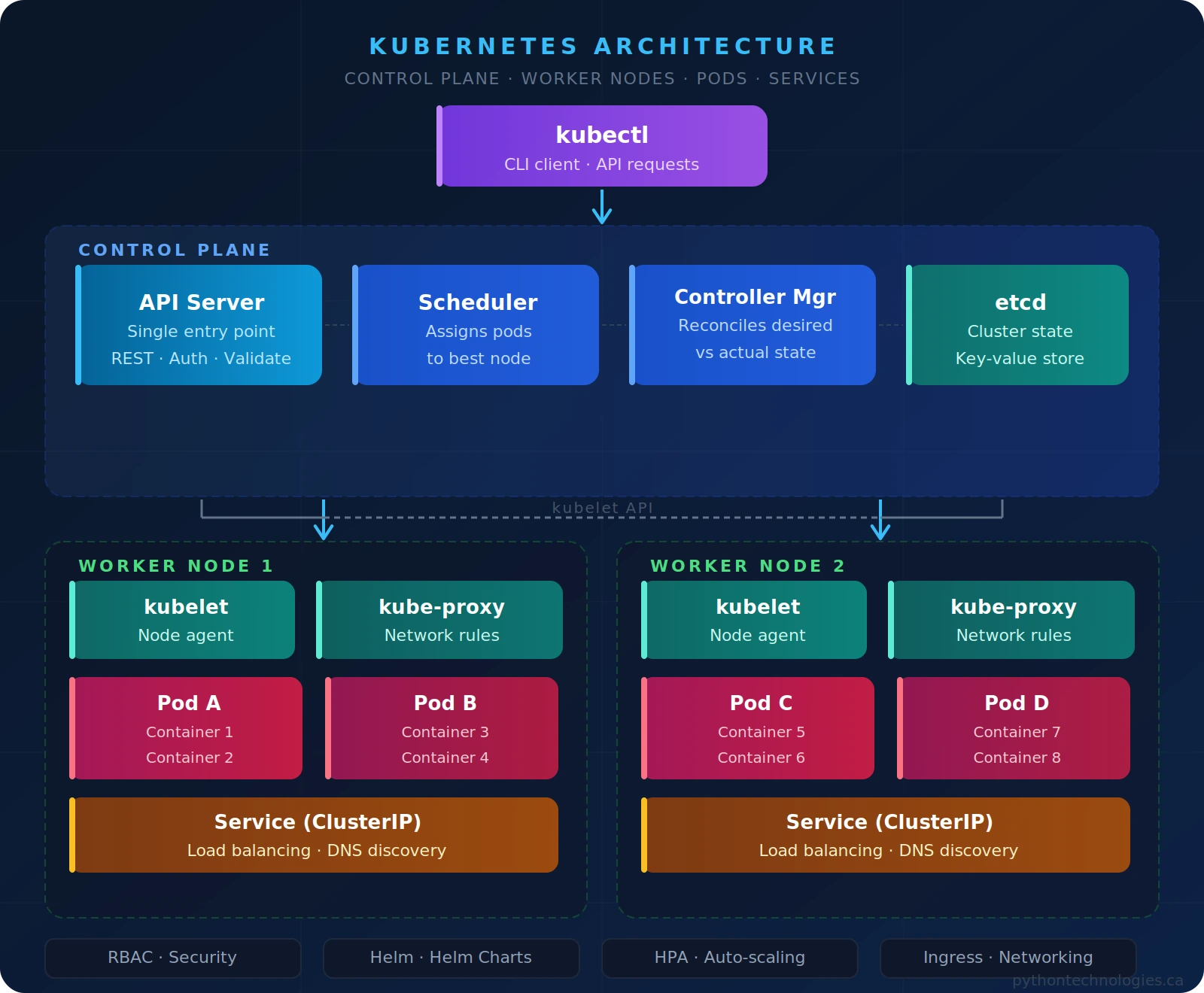
The management platform sits between your team and the orchestration layer. Your developers and operators interact with the management platform rather than the raw cluster API. The platform translates their actions into cluster operations and provides visibility into what is running, what is failing, and what resources are being used.
This is the architecture that makes container orchestration accessible to teams that are not container specialists.
How to Choose Between Docker Swarm and Kubernetes
Your situation | Recommendation |
Startup or early-stage product | Docker Swarm |
Enterprise with DevOps team | Kubernetes |
AI or ML workloads | Kubernetes |
Internal apps, limited scale | Docker Swarm |
Hybrid cloud deployment | Kubernetes |
Few developers, no dedicated ops | Docker Swarm |
Regulated industry (healthcare, finance, government) | Kubernetes |
Large SaaS platform | Kubernetes |
MVP or proof of concept | Docker Swarm |
Multi-cloud strategy | Kubernetes |
Why Canadian Businesses Choose Python Technologies
Python Technologies provides Kubernetes consulting, Docker Swarm implementation, and full DevOps automation services for Canadian businesses from our base in Cambridge, Ontario.
Our team helps organisations evaluate which platform fits their workload and team, implement the chosen platform with production-grade configuration, build CI/CD pipelines that deploy reliably to the container environment, migrate existing workloads to containers, set up monitoring and observability with Prometheus and Grafana, and provide ongoing managed DevOps support after the initial deployment.
We have delivered container infrastructure for platforms serving hundreds of thousands of users, including healthcare applications with HIPAA-adjacent security requirements and enterprise SaaS platforms running at scale. That experience informs how we scope and build container infrastructure for our clients.
Manage Docker Swarm and Kubernetes the Easy Way With Python Technologies
Getting container orchestration right from the start saves you from expensive rebuilds later. Whether you are evaluating Swarm versus Kubernetes, planning a migration from one to the other, or starting fresh with a cloud-native architecture, Python Technologies can help.
We offer a free infrastructure assessment to help you understand your current environment and what the right container orchestration path looks like for your specific workload, team size, and compliance requirements.
From there, we handle Kubernetes deployment and configuration, Docker Swarm implementation, CI/CD pipeline setup, cloud-native architecture design, and ongoing managed DevOps services so your team can focus on building the product rather than managing infrastructure.
Related Reading
If you are planning your container strategy, these related guides from Python Technologies may help:
Frequently Asked Questions
Is Docker Swarm still relevant in 2026?
Yes, but its relevance is narrowing. Swarm is still a solid choice for small teams and simple workloads. However, Docker has not invested heavily in Swarm development, the community is smaller than Kubernetes, and most managed cloud services focus on Kubernetes. For new projects, consider whether Swarm's simplicity advantage outweighs the risk of being on a less actively developed platform.
Is Kubernetes replacing Docker Swarm?
In practice, yes, for most serious workloads. Kubernetes has become the industry standard for container orchestration. Most enterprises, SaaS companies, and cloud-native development teams use Kubernetes. Swarm retains a role for simpler use cases, but the ecosystem momentum is firmly with Kubernetes.
Which is easier to learn?
Docker Swarm is significantly easier to learn. If you already know Docker, Swarm adds a few concepts and you are productive. Kubernetes has a steep learning curve with many new objects, concepts, and configuration options to understand before you can operate it confidently.
Which costs more?
Kubernetes generally costs more in total cost of ownership: higher control plane infrastructure, managed service fees for EKS or AKS, and more engineering time to operate. Swarm has lower infrastructure overhead and operational cost. At large scale, Kubernetes operational efficiency can offset its higher setup cost.
Is Kubernetes free?
The Kubernetes software itself is open source and free. You pay for the infrastructure it runs on, and for managed Kubernetes services (AKS, EKS, GKE) you also pay a management fee. Enterprise distributions like OpenShift add licence costs.
Can Docker Swarm scale?
Yes, within limits. Swarm scales well to dozens of nodes and hundreds of containers. At very large scale (thousands of nodes), Swarm becomes difficult to manage reliably. Kubernetes was designed for large-scale operation and handles it better.
Which is better for startups?
Docker Swarm is usually better for very early-stage startups that need to ship fast and have limited DevOps resources. As a startup grows and its infrastructure requirements become more complex, most teams migrate to Kubernetes. Starting on Kubernetes is also valid if you have the engineering capacity, as it avoids a future migration.
Which is better for enterprises?
Kubernetes. Enterprise environments typically need fine-grained access controls, compliance capabilities, multi-cluster management, deep CI/CD integration, and the ability to run complex workloads including AI. Kubernetes covers all of these. Swarm does not.
Can I migrate from Swarm to Kubernetes?
Yes, but it is not trivial. Your application containers will run on either platform without changes. What needs to change is your deployment configuration: Docker Compose / Swarm stack files need to be rewritten as Kubernetes manifests or Helm charts. Tools like Kompose can automate part of this conversion. Plan for a meaningful engineering investment to migrate a production environment.
Which is more secure?
Kubernetes provides more granular security controls: RBAC, network policies, pod security standards, secret encryption at rest, and fine-grained audit logging. Swarm has basic security features that are sufficient for many use cases, but not for regulated industries. For healthcare, finance, or government workloads in Canada, Kubernetes security capabilities are typically required.
Which platform is best for Canadian businesses?
It depends on your size and industry. Small Canadian businesses and startups with simple workloads benefit from Swarm's simplicity. Canadian enterprises, healthcare organisations, financial institutions, and government agencies almost always land on Kubernetes due to compliance requirements, scale needs, and the availability of managed services on Canadian cloud infrastructure (AKS in Azure Canada Central, EKS in AWS Canada regions).
Categories
- Agentic AI (3)
- AI (1)
- AI & Automation (2)
- AI Automation (2)
- Artificial Intelligence (3)
- Best AI Agents in 2026 (1)
- Business Automation (1)
- Business Technology (2)
- Canada Tech & Business (2)
- Cloud Computing (1)
- Custom Development (2)
- Custom Software Development (1)
- Custom Software Development Company (1)
- DevOps (1)
- Digital Transformation (1)
- Industry Insights (2)
- Kubernetes (1)
- LLM Integration services (1)
- Software Development (1)
- Tech Product Pricing (1)
Recent Posts
- All Posts
- Agentic AI
- AI
- AI & Automation
- AI Automation
- Artificial Intelligence
- Best AI Agents in 2026
- Business Automation
- Business Technology
- Canada Tech & Business
- Cloud Computing
- Custom Development
- Custom Software Development
- Custom Software Development Company
- DevOps
- Digital Transformation
- Industry Insights
- Kubernetes
- LLM Integration services
- Software Development
- Tech Product Pricing
- Back
- Generative AI



About
Menu
Locations
© 2026 – Python Technologies. All Rights Reserved.