
Agentic AI in 2026: The Future Your Competitors Are Already Building
Author: Python Technologies Date: 07/06/2026
A few years ago, before Agentic AI, AI only meant a chatbot on your website. Then it meant a tool that helped your team write emails faster. In 2026, AI has moved past both of those things. The businesses that are pulling ahead are not using AI as a helper. They are using it as a worker. Their AI systems research, decide, act, and finish tasks on their own. No one needs to guide every step.
This is what agentic AI is, and businesses that are not building it now are already falling behind the ones that are. In this guide, we will explain what agentic AI is, what it can do for your business, and how to approach building it the right way.
What Is Agentic AI?
Agentic AI is software that can take action on its own. You give it a goal. It figures out how to reach that goal, uses tools to get there, and completes the task without needing someone to manage every step.
Most AI tools you have used require a person to drive every interaction. You type a prompt. The AI responds. You type another prompt. That back-and-forth never stops.
Agentic AI is different. You tell it what outcome you want. It plans, executes, handles problems, and delivers. The human sets the destination. The AI drives.
For businesses, this means entire workflows can run without manual input. Not just one task at a time. Sequences of connected tasks, across multiple systems, from start to finish.
How Agentic AI Works
An agentic AI system follows a loop:
- Observe. It gathers information from whatever sources are available to it: your data, your systems, the internet, previous results.
- Plan. It breaks the goal into steps and decides what to do first.
- Act. It takes action using tools: writing a file, calling an API, sending a message, querying a database.
- Review. It checks the result. If something did not go right, it adjusts and tries again.
This loop runs continuously until the task is done or the agent determines it needs human help to proceed.
Core Components of an Agentic AI System
Every agentic AI system is built from the same set of parts:
- A large language model (LLM). The reasoning engine. It understands language, interprets context, and decides what to do next. This could be GPT, Claude, Gemini, or an open-source model.
- Tools. What the agent can use: web search, APIs, code execution, databases, calendars, email, document readers. The tools define what the agent can do in the real world.
- Memory. What the agent remembers. Short-term memory tracks the current task. Long-term memory stores information across sessions. External memory (like a vector database) allows retrieval of relevant past context.
- Orchestration. The system that coordinates multiple steps or multiple agents working together. Frameworks like LangChain, LlamaIndex, and LangGraph handle this layer.
- Guardrails. Rules and controls that define what the agent is allowed to do, what it must not do, and when to stop and ask a human.
What Makes Agentic AI Different From Traditional AI?
There are now four generations of AI that businesses deal with. Understanding the difference helps you decide what to build.
Traditional AI | Generative AI | AI Copilots | Agentic AI | |
What it does | Follows fixed rules | Generates content on request | Assists a human during a task | Completes tasks on its own |
Human involvement | Set up only | Every interaction | Every interaction | Set the goal, review the outcome |
Can use tools | No | Limited | Limited | Yes, core capability |
Memory | None | Single session | Limited | Across steps and sessions |
Handles unexpected situations | No | Sometimes | Sometimes | Yes |
Best for | Repetitive rule-based work | Drafting, summarising | Productivity support | Full workflow automation |
Traditional AI follows a script. Generative AI answers questions. AI copilots assist while you work. Agentic AI does the work.
Why Canadian Businesses Are Investing in Agentic AI in 2026
The push toward agentic AI in Canada is not coming from excitement about technology. It is coming from practical business pressure.
- Labour shortages. Finding and keeping skilled staff is expensive and difficult in most Canadian cities. Agentic AI handles high-volume, process-driven work without the hiring challenge.
- Rising operating costs. Wages, office costs, and software subscriptions keep climbing. Automation that reduces the hours spent on repetitive tasks directly reduces cost.
- Customer expectations. Customers now expect fast responses and personalised service around the clock. Agentic AI delivers this without requiring a team working nights and weekends.
- Productivity gaps. Canadian productivity growth has lagged other developed economies. AI automation gives businesses a direct way to produce more output from the same team.
- Digital transformation pressure. Industries from banking to retail to healthcare are being reshaped by businesses that move faster using better technology. Standing still is not a neutral choice.
Latest Developments in Agentic AI in 2026
The technology behind agentic AI has advanced rapidly. Here is what matters most for businesses right now.
AI memory has improved. Earlier agents forgot everything between sessions. In 2026, agents can store context across long projects and retrieve relevant past information when they need it.
Multi-agent systems are production-ready. Instead of one agent doing everything, multiple specialised agents collaborate. One gathers information. One makes decisions. One executes. One reviews. The result is faster, more accurate work than any single agent could deliver.
Autonomous planning has gotten stronger. Agents can now break down complex, multi-week goals into sequences of subtasks and work through them independently.
Tool use has expanded. Agents in 2026 can browse the web, write and run code, read documents, send emails, update CRMs, query databases, and interact with hundreds of external systems through APIs.
Enterprise AI ecosystems are forming. Large organisations are building networks of agents that handle different parts of the business and pass work between each other, creating fully automated pipelines across departments.
Workflow orchestration is more accessible. Platforms and frameworks have made it easier for development teams to build, connect, and manage agentic systems without building everything from scratch.
How Canadian Enterprises Are Using Agentic AI in 2026
Canadian businesses are rapidly investing in Agentic AI to address growing labour shortages, rising operating costs, and increasing customer expectations for faster, more personalized experiences. Unlike traditional automation, Agentic AI can independently analyze data, make decisions, and execute complex workflows, helping organizations improve productivity while reducing manual effort. As digital transformation services accelerate across industries such as healthcare, finance, retail, and manufacturing, businesses across Canada are adopting autonomous AI agents to streamline operations, DevOps and Cloud services, enhance decision-making, and build a sustainable competitive advantage in 2026 and beyond.
Finance
Agentic AI in finance is handling fraud detection, automated reporting, document review for loans and compliance, and real-time risk assessment. Agents monitor transaction patterns and flag anomalies faster than any human team could review them.
Healthcare
Agentic AI Healthcare providers are using agentic AI for patient intake, symptom triage, appointment scheduling, and document processing. Our work on Sensely, an AI healthcare platform serving 285,000 users, showed what AI-driven patient engagement looks like at scale. A virtual assistant handles the first layer of patient interaction, freeing clinical staff for the work that needs human judgment.
Customer Support
AI customer agents handle inbound support queries, check account information, resolve common problems, and route complex cases to human staff. Our work on AutoCalls.ai built AI voice agents capable of managing calls in 100 plus languages, covering lead qualification, appointment booking, and customer support without a human on every call.
Internal Knowledge Management
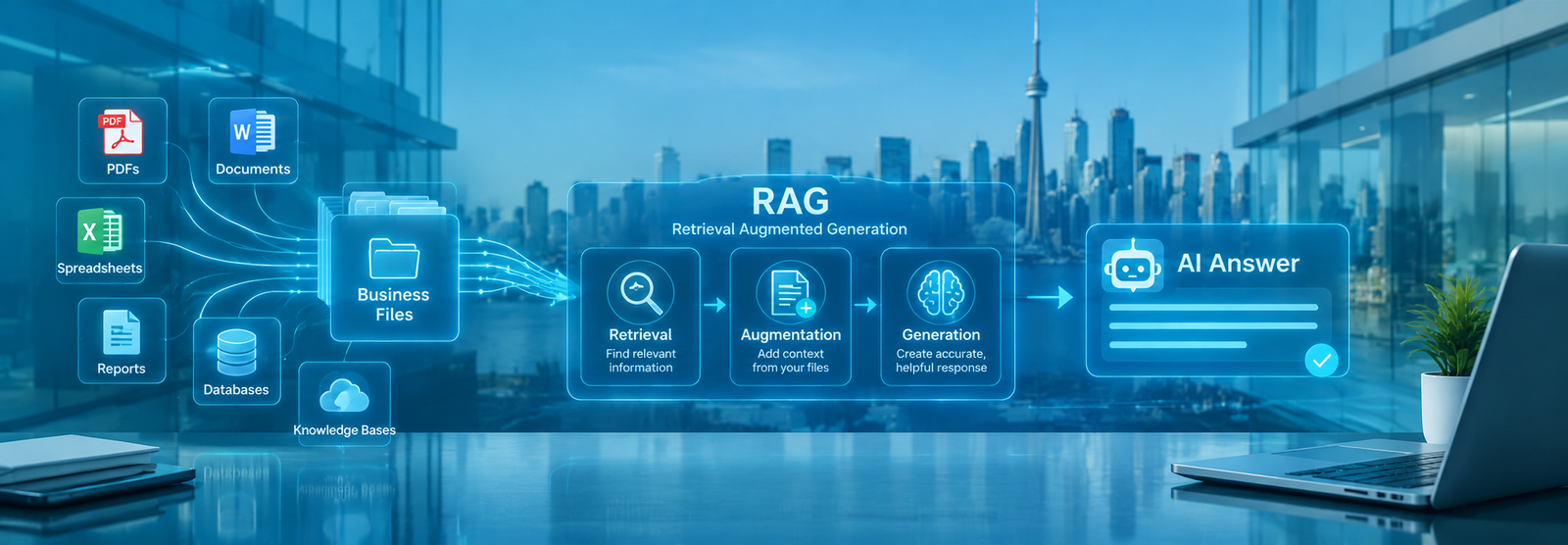
Enterprise teams spend hours searching for internal documents, policies, and past decisions. Knowledge AI systems built on RAG pipelines retrieve accurate answers from internal knowledge bases in seconds.
Sales and Lead Qualification
AI agents score inbound leads, pull CRM data, send personalised follow-ups, and book meetings through AI Lead Qualification without a sales rep involved until the lead is qualified and ready to talk.
Document Processing
AI Document Processing can make sure Legal, financial, and operational documents are read, summarised, categorised, and routed automatically. Our work on Imprima, an AI-powered virtual data room for 600 enterprise users, built exactly this for complex M&A transactions.
E-Commerce
Agentic AI in E-commerce 2025 2026 generate product descriptions, update inventory, respond to customer questions, process returns, and personalise the shopping experience, all without manual input at each step.
Businesses Will Not Just Use AI Agents - They'll Let Agents Run Their Workflows
In 2026, businesses are moving beyond using AI as a simple assistant—they’re deploying AI agents that can independently manage and optimize entire business processes. Powered by AI workflow automation and intelligent automation, these agents analyze data, make decisions, collaborate with other systems, and complete tasks with minimal human intervention. From streamlining HR onboarding and payroll to automating financial reporting, procurement approvals, sales follow-ups, operational monitoring, and 24/7 customer support, Agentic AI is transforming how organizations operate. Instead of automating individual tasks, companies are embracing business process automation that enables AI agents to run end-to-end workflows more efficiently, accurately, and at scale. Businesses exploring real-world implementations can review AI Use Cases and AI Automation Case Study to see how autonomous AI solutions deliver measurable business outcomes.
The Technology Stack Behind Enterprise Agentic AI in 2026
Building a production-ready agentic AI system requires several layers of technology working together.
LLMs Integration services provide the reasoning core Chat GPT, Claude, and Gemini are the most widely used. Open-source models via Hugging Face are used where data residency or cost makes managed APIs impractical.
APIs connect the agent to external systems: your CRM, your ERP, payment processors, communication tools, and any other platform your business uses.
Vector databases store embedded representations of your business data so agents can retrieve relevant information accurately. Tools like Pinecone, Weaviate, and pgvector power this layer.
RAG pipelines combine document retrieval with LLM reasoning so agents can answer questions grounded in your actual business data rather than general training.
MCP (Model Context Protocol) is an emerging standard for connecting AI agents to external tools and data sources in a structured, secure way. It simplifies how agents interact with the systems around them.
Cloud infrastructure provides the scalability and reliability that enterprise agentic systems require. AWS, Azure, and Google Cloud all support the deployment patterns modern AI systems need.
Security and access control through AI cyber security services determine what each agent can see and do. Role-based permissions, audit logging, and encryption are not optional at enterprise scale.
Benefits of Agentic AI for Canadian Businesses
Reduced costs. Automating high-volume, process-driven work directly reduces the labour hours those tasks require.
Faster execution. Agents work around the clock without breaks. Tasks that wait in a queue for a human complete in seconds.
Better customer experience. Faster responses, consistent accuracy, and 24/7 availability improve how customers feel about your business.
24/7 automation. Agents do not have office hours. Work happens at 2am on a Saturday the same as 10am on a Tuesday.
Increased revenue. Faster lead follow-up, better customer retention, and more efficient sales processes all contribute to top-line growth.
Challenges of Deploying Agentic AI in 2026
Agentic AI is powerful. It also comes with real challenges that businesses need to plan for.
Governance. Agents make decisions. Those decisions need oversight, documentation, and clear accountability.
Security. An agent with access to your systems is a security surface. Access must be carefully scoped and monitored.
Compliance. In regulated industries, AI-generated outputs may need to meet specific standards. PIPEDA, PHIPA, and sector-specific regulations apply in Canada.
Privacy. Agents that handle customer or employee data must do so in compliance with Canadian privacy law.
Hallucinations. LLMs can produce confident but incorrect outputs. Production systems need validation layers that catch errors before they reach users or trigger real-world actions.
Human oversight. For high-stakes actions, a human needs to stay in the loop. Good agent design builds in checkpoints where human approval is required before the agent proceeds.
How Python Technologies Builds Agentic AI Solutions for Canadian Businesses
Successfully implementing Agentic AI requires more than choosing the right AI model—it demands a clear strategy, robust architecture, and seamless integration with existing business systems. At Python Technologies, we help Canadian businesses design and deploy intelligent AI agents that align with their operational goals while ensuring scalability, security, and measurable ROI.
Discovery & Business Process Mapping
Every successful AI initiative starts with understanding your business. Our team works closely with stakeholders to identify repetitive tasks, process bottlenecks, and high-impact automation opportunities. Through detailed business process mapping, we determine where autonomous AI agents can deliver the greatest value while integrating smoothly with your existing workflows.
AI Strategy & Solution Design
Once opportunities are identified, we develop a tailored AI strategy that aligns with your business objectives, technical infrastructure, and compliance requirements. Whether you’re planning enterprise-wide automation or a focused proof of concept, AI & ML Services help create a roadmap for sustainable AI adoption that supports long-term growth.
Custom AI Development & LLM Integration
Every business has unique requirements, which is why we build custom Agentic AI solutions rather than relying on one-size-fits-all platforms. Our team develops intelligent AI agents, integrates leading large language models (LLMs), connects enterprise APIs, and enables secure access to your business data. Learn about Custom Software Development and AI & ML Services to see how we create scalable, enterprise-grade AI solutions.
Deployment, Monitoring & Continuous Optimization
Deploying Agentic AI is only the beginning. We continuously monitor agent performance, improve workflows, refine prompts, strengthen security controls, and optimize decision-making to ensure reliable, long-term results. This iterative approach helps businesses maximize automation, reduce operational costs, and improve productivity as their needs evolve.
Whether you’re exploring your first AI initiative or scaling enterprise-wide automation, our team provides end-to-end support, from strategy and development to deployment and optimization. Contact our AI experts to discuss how Python Technologies can help your business build secure, intelligent Agentic AI solutions for the future.
Measuring ROI From Agentic AI
Agentic AI projects should be held to the same standard as any other business investment. These are the KPIs that matter:
Cost savings. How many labour hours per week does the automation replace? At what cost per hour? This is usually the clearest and most immediate ROI signal.
Revenue growth. Faster lead response, better conversion, and higher customer retention all contribute. Measure the change after deployment.
Customer satisfaction. Response times, resolution rates, and customer satisfaction scores before and after.
Employee productivity. Are your human team members spending their time on higher-value work? Track what they are doing with the hours the agent freed up.
Automation percentage. What share of a given workflow is now fully automated versus requiring human input? Track this over time and set targets.
The Future of Agentic AI Beyond 2026
The direction is clear. The businesses investing in agentic AI today are building toward something bigger than individual automations.
Self-improving business processes. Agents that analyse their own performance, identify failure patterns, and flag improvements to human teams.
Autonomous enterprises. Organisations where core operations run through networks of AI agents that manage each other, with humans setting strategy and reviewing outcomes rather than managing day-to-day tasks.
Digital workers. AI agents that function as full contributors to the organisation, with defined responsibilities, measurable output, and integration into team workflows alongside human colleagues.
Multi-agent collaboration. Complex projects handled by teams of specialised agents, each handling the part of the problem it is best at, coordinated by an orchestration layer.
The businesses that build the foundations now will be the ones positioned to operate at that level. Waiting to start when the technology is even more mature means starting even further behind.
Final Thoughts
Agentic AI in 2026 is not an experiment. It is a production technology that Canadian businesses are using right now to cut costs, move faster, and serve customers better.
The question is not whether agentic AI will reshape how Canadian enterprises operate. That is already happening. The question is whether your business is building the systems that will run your workflows more efficiently than your competitors run theirs.
If you want to assess where autonomous AI agents could deliver the highest ROI in your business and build a practical implementation roadmap, Python Technologies is ready to help.
Talk to Python Technologies about your Agentic AI strategy.
Conclusion
Agentic AI is no longer a future concept, it’s becoming a strategic advantage for Canadian businesses looking to improve productivity, reduce operational costs, and stay competitive in an increasingly digital economy. As autonomous AI agents evolve from assisting employees to managing complex workflows, organizations that invest early will be better positioned to scale operations, deliver exceptional customer experiences, and make faster, data-driven decisions.
Whether you’re exploring AI-powered automation for a single department or planning an enterprise-wide transformation, the key is identifying the business processes where Agentic AI can deliver the greatest return on investment. With the right strategy, technology, and implementation partner, your business can unlock long-term efficiency and sustainable growth.
At Python Technologies, we help organizations across Canada design, develop, and deploy secure, scalable Agentic AI solutions tailored to their unique business needs. If you’re ready to build an AI roadmap or evaluate where autonomous AI agents can create the highest impact, contact our team to discuss your goals and discover how Agentic AI can transform your business in 2026 and beyond.
Frequently Asked Questions
Is Agentic AI safe for regulated industries?
Yes, with the right design. Regulated industries like healthcare and finance need agents built with strict access controls, audit logging, compliance checks, and human-in-the-loop approval for high-stakes decisions. PIPEDA and PHIPA compliance can be built into the architecture from the start.
What infrastructure is required to run Agentic AI?
You need a cloud environment (AWS, Azure, or Google Cloud), an LLM API or self-hosted model, a vector database for retrieval, and secure API connections to your existing systems. For enterprise deployments, monitoring and observability tools are also required.
How long does it take to deploy Agentic AI in production?
A single-workflow agent takes 4 to 8 weeks from scoping to deployment. An enterprise system covering multiple departments and integrations takes 3 to 6 months. The timeline depends on the complexity of your existing systems, data quality, and how many workflows are in scope.
How do companies measure ROI from Agentic AI?
The clearest measures are labour hours saved per week, cost reduction in the automated workflow, revenue changes from faster sales or support processes, and customer satisfaction scores. Set baseline measurements before deployment so you have a clean before-and-after comparison.
Can Agentic AI integrate with existing ERP and CRM systems?
Yes. Modern agentic AI systems connect to ERP and CRM platforms through APIs. We have built integrations with Salesforce, HubSpot, and custom-built CRMs and ERPs. The agent reads from and writes to these systems as part of its task execution without replacing the systems themselves.
Is Agentic AI suitable for Canadian SMEs?
Yes. SMEs often see faster ROI than large enterprises because a small team gets a much bigger productivity boost from automation. Starting with one well-defined workflow keeps the initial investment manageable, and the system can expand as the business grows.
What is the difference between Agentic AI and Generative AI?
Generative AI produces content when you ask it to. You prompt it, it responds, and that is the end of the interaction. Agentic AI acts on a goal. It plans steps, uses tools, makes decisions, and completes a workflow without someone guiding every move.
Categories
- Agentic AI (14)
- AI (1)
- AI & Automation (3)
- AI & Technology (1)
- AI Adoption (1)
- AI Automation (9)
- AI Business Solutions (1)
- AI Consulting (1)
- AI Costs & Pricing (1)
- AI Development (3)
- AI Framework (1)
- AI Governance & Compliance (1)
- AI in Enterprise (3)
- AI Services Canada (1)
- AI Strategy (2)
- AI Use Cases (1)
- AI/ML Services (1)
- Artificial Intelligence (7)
- Artificial Intelligence Canada (2)
- Best AI Agents in 2026 (2)
- Business Automation (2)
- Business Technology (4)
- Business Technology Canada (1)
- Canada Tech & Business (3)
- Case Studies (1)
- Cloud Computing (1)
- CRM Automation (1)
- Custom Development (2)
- Custom Software Development (2)
- Custom Software Development Company (2)
- Customer Support (2)
- DevOps (1)
- Devops & Cloud Services (1)
- DevOps Services (1)
- Digital Transformation (5)
- ERP Technology (3)
- Hiring Guide (1)
- Industry Insights (2)
- Kubernetes (1)
- LLM Integration services (1)
- Local Business Guides (1)
- Machine Learning (1)
- Ontario Tech (1)
- Productivity (1)
- Python Development (1)
- RAG AI Framework (1)
- Software Development (2)
- Software Engineering (1)
- Tech Product Pricing (1)
- Web Development (1)
Recent Posts
- All Posts
- Agentic AI
- agentic AI customer support
- AI
- AI & Automation
- AI & Technology
- AI Adoption
- AI Automation
- AI Business Solutions
- AI Consulting
- AI Costs & Pricing
- AI Development
- AI Framework
- AI Governance & Compliance
- AI in Enterprise
- AI Services Canada
- AI Strategy
- AI Use Cases
- AI/ML Services
- Artificial Intelligence
- Artificial Intelligence Canada
- Best AI Agents in 2026
- Business Automation
- Business Technology
- Business Technology Canada
- Canada Tech & Business
- Case Studies
- Cloud Computing
- CRM Automation
- Custom Development
- Custom Software Development
- Custom Software Development Company
- Customer Support
- DevOps
- Devops & Cloud Services
- DevOps Services
- Digital Transformation
- ERP Technology
- Hiring Guide
- Industry Insights
- Kubernetes
- LLM Integration services
- Local Business Guides
- Machine Learning
- Ontario Tech
- Productivity
- Python Development
- RAG AI Framework
- Software Development
- Software Engineering
- Tech Product Pricing
- Web Development
- Back
- Generative AI


About
Menu
Locations

© 2026 – Python Technologies. All Rights Reserved.