
Best AI Agents Development for HR: How Python Technologies Built YourHRToolkit.ai
Categories
- Agentic AI (14)
- AI (1)
- AI & Automation (3)
- AI & Technology (1)
- AI Adoption (1)
- AI Automation (9)
- AI Business Solutions (1)
- AI Consulting (1)
- AI Costs & Pricing (1)
- AI Development (3)
- AI Framework (1)
- AI Governance & Compliance (1)
- AI in Enterprise (3)
- AI Services Canada (1)
- AI Strategy (2)
- AI Use Cases (1)
- AI/ML Services (1)
- Artificial Intelligence (7)
- Artificial Intelligence Canada (2)
- Best AI Agents in 2026 (2)
- Business Automation (2)
- Business Technology (4)
- Business Technology Canada (1)
- Canada Tech & Business (3)
- Case Studies (1)
- Cloud Computing (1)
- CRM Automation (1)
- Custom Development (2)
- Custom Software Development (2)
- Custom Software Development Company (2)
- Customer Support (2)
- DevOps (1)
- Devops & Cloud Services (1)
- DevOps Services (1)
- Digital Transformation (5)
- ERP Technology (3)
- Hiring Guide (1)
- Industry Insights (2)
- Kubernetes (1)
- LLM Integration services (1)
- Local Business Guides (1)
- Machine Learning (1)
- Ontario Tech (1)
- Productivity (1)
- Python Development (1)
- RAG AI Framework (1)
- Software Development (2)
- Software Engineering (1)
- Tech Product Pricing (1)
- Web Development (1)
Recent Posts
- All Posts
- Agentic AI
- agentic AI customer support
- AI
- AI & Automation
- AI & Technology
- AI Adoption
- AI Automation
- AI Business Solutions
- AI Consulting
- AI Costs & Pricing
- AI Development
- AI Framework
- AI Governance & Compliance
- AI in Enterprise
- AI Services Canada
- AI Strategy
- AI Use Cases
- AI/ML Services
- Artificial Intelligence
- Artificial Intelligence Canada
- Best AI Agents in 2026
- Business Automation
- Business Technology
- Business Technology Canada
- Canada Tech & Business
- Case Studies
- Cloud Computing
- CRM Automation
- Custom Development
- Custom Software Development
- Custom Software Development Company
- Customer Support
- DevOps
- Devops & Cloud Services
- DevOps Services
- Digital Transformation
- ERP Technology
- Hiring Guide
- Industry Insights
- Kubernetes
- LLM Integration services
- Local Business Guides
- Machine Learning
- Ontario Tech
- Productivity
- Python Development
- RAG AI Framework
- Software Development
- Software Engineering
- Tech Product Pricing
- Web Development
- Back
- Generative AI

Author: Python Technologies Date: 10/07/2026
Most HR teams spend hours answering the same questions. What is the process for managing underperformance? How do you handle a probation review? What documents do you need for a new hire? These questions repeat every day, and someone on the team has to stop real work to answer them.
AI agents development changes that completely. Instead of one generic chatbot that handles everything loosely, a well-built AI HR platform uses specialist agents, each one trained and scoped to handle a specific part of the HR lifecycle. Python Technologies built exactly that for YourHRToolkit.ai, a production AI SaaS product now serving Australian businesses.
This blog covers what was built by Python technologies, how it was built, and what real AI agents development looks like and what tasks AI Agents Development can automate in HR.
What Is YourHRToolkit.ai?
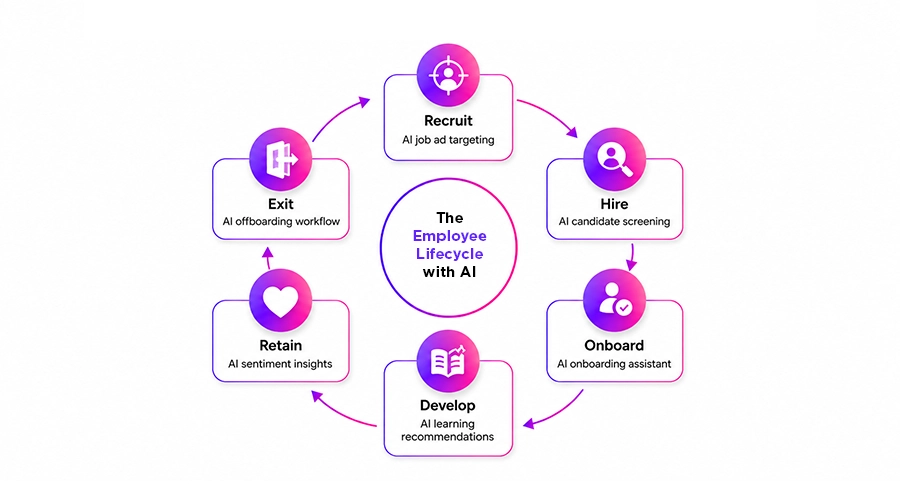
YourHRToolkit.ai is an AI-powered HR platform built for Australian businesses. Python Technologies designed and developed the entire platform from scratch, including eight specialist AI agents that cover the full employee lifecycle, an intelligent document generation system, and a SaaS subscription model.
Here are the key facts at a glance:
- 8 specialist AI agents covering distinct HR functions
- Built for Australian HR requirements, including Fair Work and National Employment Standards considerations
- Users get HR guidance, document generation, and practical action in one platform
- SaaS subscription model with scalable infrastructure
- Developed end-to-end by Python Technologies, from discovery to production deployment
This is one of the strongest examples of practical AI agents development in the HR space. Each agent has a defined role. No agent tries to do everything.
Why 8 Agents Instead of One Chatbot?
This is the most important design decision in the whole project.
A single generic chatbot trained on HR content will give vague answers. Ask it about underperformance management and it will give you a general answer that may not apply to your jurisdiction, your company size, or your situation.
Specialist AI agents work differently. Each agent is scoped to a specific domain. It has focused knowledge, focused instructions, and focused outputs. The Managing Underperformance Agent only handles underperformance. The Recruitment Agent only handles hiring and onboarding. That focus is what makes the outputs actually useful.
Python Technologies’ approach to AI agents development treats each agent as a product in itself. Before any code is written, the team maps what the agent will handle, what it will not handle, how it will respond when users ask something outside its scope, and how its outputs will be evaluated for accuracy. This is what separates serious AI product development from a chatbot with a system prompt.
For Canadian businesses exploring similar builds, the same principles apply. The team has delivered custom AI agents for GTA businesses and built production agentic AI systems across multiple industries.
The Eight Specialist AI Agents
Python technologies built 8 AI agents for HR as in AI SaaS Product Development, these 8 agents are:
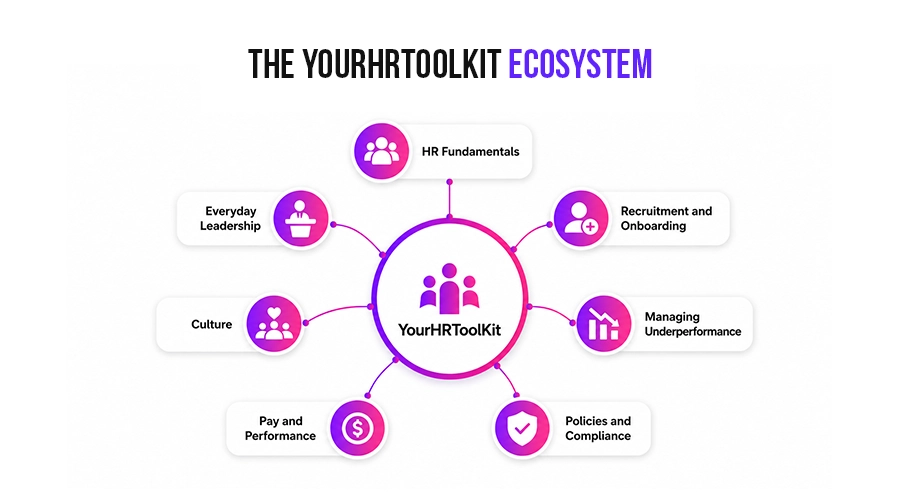
1. HR Fundamentals Agent
This agent handles the core HR knowledge layer. Users ask foundational questions about employment law, HR policy structure, workplace rights, and general HR best practices. A concrete example: “What are an employer’s obligations when a new employee fails probation?” The agent gives a direct, scoped answer without sending the user to a law firm.
2. Recruitment, Onboarding and Probation Agent
This agent covers the hiring cycle from job posting to probation completion. It handles questions about interview processes, offer letters, onboarding checklists, and probation review procedures. The work here focused on keeping outputs practical, not theoretical. The agent generates onboarding documents users can actually use.
3. Managing Underperformance Agent
This is a high-stakes agent. Underperformance management has legal exposure. Saying the wrong thing, missing a step, or skipping documentation can create serious problems for a business. Python Technologies built this agent to guide users through a structured process: document the issue, communicate it clearly, set a performance improvement plan, and follow through consistently. The agent does not give legal advice. It gives structured process guidance backed by HR expertise.
4. Policies and Compliance Agent
This agent helps businesses build and review HR policies. Users can ask about what a specific policy should cover, how to structure it, and what Australian employment requirements it needs to address. The work here required careful scoping to avoid the agent making compliance guarantees it cannot make. The outputs are structured guidance, not certified legal documents.
5. Pay and Performance Agent
This agent handles questions about compensation structures, performance review frameworks, and pay-related HR processes. It helps HR teams think through how to structure performance cycles, what to include in reviews, and how to handle pay conversations. Where award rate minimums or legal pay requirements apply, the agent flags these as areas requiring professional verification rather than providing definitive figures.
6. Culture Agent
This agent helps businesses build intentional workplace culture. A concrete output example: a values guidebook. Users can work with the agent to define their company values, translate them into day-to-day behaviors, and create documentation that reflects those values. This agent is intentionally distinct from the Everyday Leadership Agent, which focuses on management behaviors rather than organizational culture design.
7. Everyday Leadership Agent
This agent supports managers with practical leadership guidance. How do you give effective feedback? How do you run a team meeting that people actually find useful? How do you handle a team member who is disengaged? The agent provides structured, practical answers grounded in HR best practices.
8. Your HR Toolkit Resources Agent
This agent gives users access to templates, guides, and HR documents. It is a structured resource layer. Users can find the document they need, fill it in with guidance from the relevant specialist agent, and download it directly. This is where the platform’s document generation system connects with the agent layer.
How the Platform Works
The user flow is simple on the surface. Ask a question, get guidance, generate a document or take action. Under the hood, the architecture is more deliberate.
When a user submits a question, the platform routes it to the most relevant specialist agent based on the question’s topic. The agent applies its focused knowledge and instructions to generate a response. If the question requires a document, the platform connects the agent’s guidance to the document generation system, which produces a structured output the user can edit, save, and download.
The technical stack behind this includes a modern React frontend, a Python backend, LLM integration through a leading AI provider, an agent orchestration layer that manages routing and context, and a cloud-hosted infrastructure with automated deployment. All data handling was designed with privacy and security in mind, including secure authentication and controlled document access.
Python Technologies’ broader approach to LLM integration services and generative AI and LLM integration informs this architecture. The team has built similar systems for agentic AI in CRM and agentic AI support systems.
AI-Powered HR Document Generation
Document generation is one of the most valuable features in YourHRToolkit.ai. HR teams spend real time writing and formatting documents. A performance improvement plan, an onboarding checklist, a policy document, a warning letter. Each one takes time to draft from scratch and time to review for accuracy.
The platform generates these documents based on user inputs. A user describes the situation, works through the relevant specialist agent, and the platform produces a structured document the user can edit and download. This is not a template filler. The output is shaped by the agent’s guidance and the user’s specific inputs.
This capability is directly connected to the AI agents development approach. Because each agent is scoped to its domain, the documents it helps generate are relevant to that domain. The Managing Underperformance Agent does not produce recruitment documents. The Recruitment Agent does not produce performance improvement plans. The scope controls the quality.
Built for Australian HR Requirements
YourHRToolkit.ai was built specifically for the Australian market. The platform’s agents reflect Australian HR terminology, workflows, and employment considerations, including Fair Work Act context and National Employment Standards.
This level of localization is intentional. Generic HR tools are built for a global audience and often miss jurisdiction-specific nuance. A tool that understands Australian leave entitlements, Australian termination processes, and Australian compliance language is more useful to an Australian HR team than a generic platform with a local logo.
The localization work was part of the AI agents development process from the start. The prompt engineering, the knowledge sources, and the response evaluation all accounted for Australian HR context.
The Challenge Python Technologies Solved
The client behind YourHRToolkit.ai had deep HR expertise and a clear vision: make specialist HR guidance accessible to small and medium businesses that cannot afford a full-time HR team or a retainer with an HR consultancy.
The challenge was turning that expertise into an AI product that actually delivers accurate, trustworthy guidance at scale. Generic AI tools were not good enough. They gave vague answers, missed jurisdiction-specific nuance, and could not generate the documents users actually needed.
Python Technologies solved this through a structured AI agents development process:
- Discovery and architecture came first. The team mapped every major HR domain the platform needed to cover, identified where specialist scope would matter most, and designed the agent architecture before writing any code.
- Prompt engineering and agent design came next. Each agent’s instructions were built carefully, tested against real user questions, and evaluated for accuracy. Outputs that were too vague or too broad were revised until they met a practical accuracy bar.
- Full-stack development delivered the frontend experience, the backend infrastructure, the LLM integration, and the document generation system as one cohesive product.
- Testing and QA included functional testing, API testing, AI output evaluation, document generation testing, and subscription flow testing. The AI output evaluation step is the most important one for an AI SaaS product. Getting the agent to respond correctly most of the time is not enough. The team tested edge cases, out-of-scope questions, and adversarial inputs to ensure the agents stayed within their defined boundaries.
- Deployment and handover put the platform into production with a cloud infrastructure that can scale as the user base grows.
For businesses in Canada considering similar builds, the AI agent development cost and timeline guide gives a clear picture of what to expect.
Real AI Agents Development: What It Actually Takes
YourHRToolkit.ai is a working example of what serious AI agents development produces. Here is what the process actually requires.
- Domain expertise matters as much as technical skill. An AI agent is only as useful as the knowledge and instructions behind it. Python Technologies worked closely with the client’s HR expertise to shape each agent’s scope, language, and outputs. This is not a purely technical project. It is a collaboration between AI engineers and domain experts.
- Evaluation is not optional. Building an agent and testing whether it runs is not the same as testing whether it is useful. The team evaluated agent outputs against real HR questions and revised the prompts until the accuracy bar was met. This evaluation step is what makes the difference between an AI tool that sounds good in a demo and one that works in production.
- Security and data handling require deliberate design. An HR platform handles sensitive employee and business data. Authentication, access controls, data storage, and document security were all built into the platform from the start, not added after the fact.
- Scalability comes from the architecture, not the launch plan. The SaaS subscription model and cloud infrastructure were designed to scale from the first day. The platform can grow its user base without requiring a rebuild.
Python Technologies brings this same approach to custom software development services in Canada and AI development for Canadian businesses. The team has delivered 87+ projects across AI, SaaS, web, and mobile.
Python Technologies' Proven Track Record
When businesses ask about real-world results, the portfolio speaks clearly.
Vikk AI reached 100,000 users. Sensely scaled to 285,000 users. VoiceCenta serves 700 active users. Enso Bot handles 690 users. Levity powers automation for 350 businesses. Hakem AI is live with 300 users.
These are not mockups. These are shipped products with real users. YourHRToolkit.ai joins this portfolio as another example of what Python Technologies delivers when a client brings a real problem and a serious vision.
The team serves businesses across Canada, including Toronto, Vancouver, Calgary, Waterloo, Cambridge, Kitchener, Mississauga, and the broader GTA. Whether the goal is a full AI SaaS product, a specialist agent layer, or AI automation for Canadian businesses, the process starts the same way: understand the domain, design the architecture, build with precision, and ship something that works.
Before YourHRToolkit.ai vs. After
Before | After |
HR questions answered manually, one at a time | 8 specialist agents answer instantly, 24/7 |
Generic templates that miss Australian context | Documents generated with Australian HR context built in |
No consistent process for underperformance or onboarding | Structured, step-by-step guidance for every major HR workflow |
HR expertise locked in one person or consultancy | Accessible to any manager with a subscription |
Hours spent drafting HR documents | Minutes to generate, edit, and download |
Canada-Focused AI Agents Development
For Canadian businesses, the lessons from YourHRToolkit.ai apply directly. The Canadian HR and employment landscape has its own requirements, from provincial employment standards to federal regulations and the incoming AIDA framework.
Building specialist AI agents for Canadian HR, Canadian compliance, or any other domain-specific use case follows the same pattern. Define the scope. Design the agents. Engineer the prompts. Evaluate the outputs. Ship and scale.
Python Technologies is based in Cambridge, Ontario and serves clients across the GTA, Waterloo Region, Toronto, and beyond. The team’s work on AI regulations in Canada post-AIDA and AI adoption in Canada gives context on where the market is heading. The team’s agentic AI services are built for exactly this kind of work.
If you are thinking about building an AI SaaS product, a specialist agent system, or a domain-specific AI platform, the custom software development team at Python Technologies can help you go from idea to production.
Key Takeaways
- Specialist AI agents outperform generic chatbots in domain-specific applications like HR
- Prompt engineering and output evaluation are the highest-value steps in AI agents development
- Document generation connected to agent guidance creates practical, immediate value for users
- Localization for a specific market (Australian HR in this case) requires deliberate design, not just translation
- Scalable SaaS architecture must be designed from day one, not added after launch
- Python Technologies has delivered this kind of build for real clients with real users
Ready to Build Your AI SaaS Product?
If you have domain expertise and a problem worth solving, Python Technologies can turn it into a production AI product. The team has done it for HR, for customer support, for CRM, and for enterprise automation.
The contact page is the fastest way to start a conversation. You can also explore the AI and ML services page to see what the team offers, or review the case studies to see more real builds.
Talk to the AI development team at Python Technologies and build something that works.
Frequently Asked Questions About AI Automation
What is AI agent development for HR?
AI agent development for HR means building specialist AI systems that handle specific parts of the HR function, such as recruitment, underperformance management, or compliance guidance. Each agent is scoped, trained, and evaluated for its specific domain rather than trying to handle all HR topics with one generic model. The result is more accurate, more useful guidance for HR teams and managers.
How many AI agents does YourHRToolkit.ai have?
YourHRToolkit.ai has eight specialist AI agents: HR Fundamentals, Recruitment and Onboarding and Probation, Managing Underperformance, Policies and Compliance, Pay and Performance, Culture, Everyday Leadership, and Your HR Toolkit Resources. Each agent covers a distinct part of the employee lifecycle.
What is the difference between a chatbot and an AI agent for HR?
A chatbot gives general answers from a broad knowledge base. An AI agent for HR is scoped to a specific domain, follows structured instructions, and produces outputs evaluated for accuracy in that domain. The difference between chatbots and agentic AI matters most in high-stakes domains like HR, where vague answers create real problems.
Can Python Technologies build a similar AI HR platform for Canadian businesses?
Yes. Python Technologies has the technical team, the AI development experience, and the understanding of the Canadian market to build specialist AI agents for HR or any other domain-specific use case. The hire AI developers in Canada page has more details on how to start.
How long does AI agents development take?
Timeline depends on the scope. A single specialist agent can be designed, built, tested, and deployed in weeks. A full platform like YourHRToolkit.ai with eight agents, document generation, and a SaaS subscription model takes longer. The AI agent development cost and timeline guide gives a detailed breakdown for Canadian businesses.
What technologies are used in AI agents development?
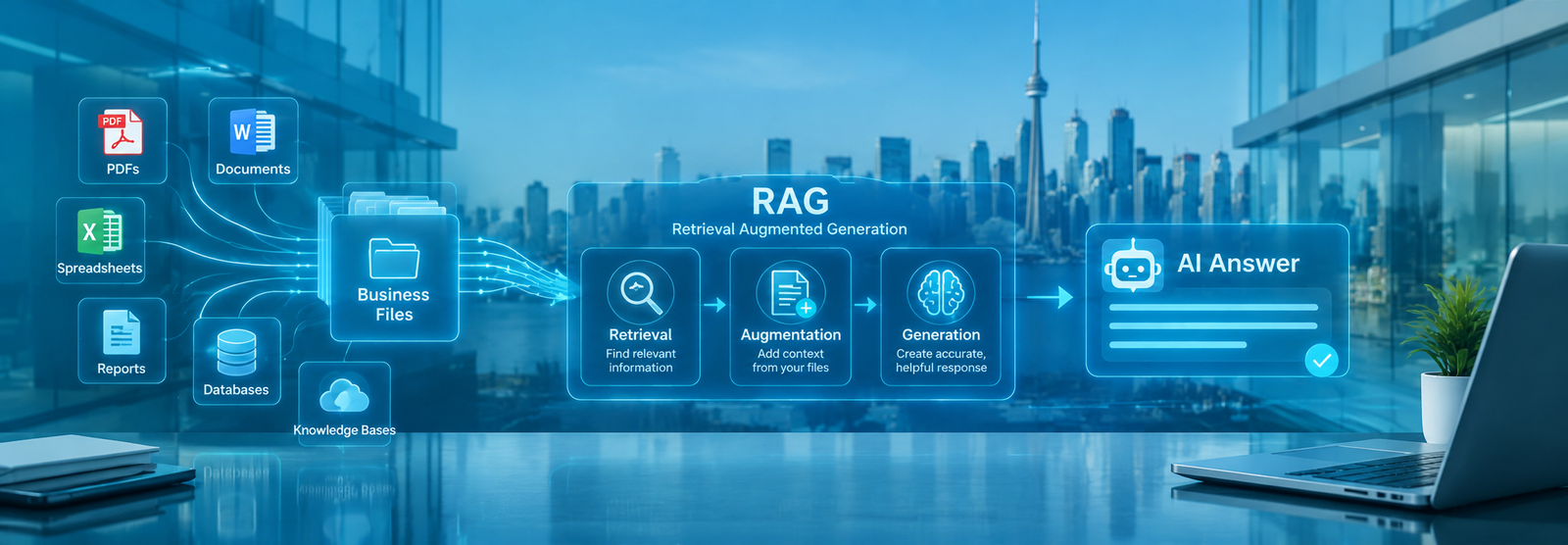
Common components include an LLM provider such as OpenAI or Anthropic, an agent orchestration framework, a vector database for retrieval-augmented generation, a backend API layer, and a frontend interface. The exact stack depends on the use case, the data requirements, and the client's infrastructure. Python Technologies selects the stack based on what the product actually needs, not what is currently popular.
Is AI agents development only for large companies?
No. YourHRToolkit.ai was built specifically to give small and medium businesses access to HR guidance that used to require a large internal HR team or an expensive consultancy. Specialist AI agents make expert-level guidance accessible at a fraction of the cost. The same principle applies across industries.
What should Canadian businesses look for in an AI agents development company?
Look for a team that has shipped AI products with real users, not just demos. Look for a clear evaluation process for agent outputs, not just a build and launch approach. Look for experience with Canadian compliance requirements, including PIPEDA and the incoming AIDA framework. Python Technologies meets all three, with a portfolio of AI agents built for Canadian businesses and a track record of best AI automation use cases for Canadian businesses.
Python Technologies is a Canadian AI software development company specializing in custom AI Software development solutions. This Blog is written by Arsalan Ali, Senior SEO Specialist at Python Technologies, and Reviewed by Saad Rabbani chief Marketing officer at Python Technologies.
About
Menu
Locations

© 2026 – Python Technologies. All Rights Reserved.